


















BUILDERS RISK INSURANCE FOR CONTRACTORS
protect the project Before It's finished
JCF CONTRACTOR INSURANCE
BUILDERS RISK INSURANCE FOR CONTRACTORS
protect the project Before It's finished
JCF CONTRACTOR INSURANCE
A fire, theft, vandalism, or severe storm can damage a construction project long before the owner receives the keys. Builders risk insurance can help protect the structure, building materials, and covered property during new construction, remodeling, or renovation.
✓ NEW CONSTRUCTION
✓ REMODELS & RENOVATIONS
✓ BUILDING MATERIALS
✓ fIRE, THEFT & WEATHER
A fire, theft, vandalism, or severe storm can damage a construction project long before the owner receives the keys. Builders risk insurance can help protect the structure, building materials, and covered property during new construction, remodeling, or renovation.
✓ NEW CONSTRUCTION
✓ REMODELS & RENOVATIONS
✓ BUILDING MATERIALS
✓ fIRE, THEFT & WEATHER
Builders Risk Coverage for Construction and Renovation Projects in Washington, Oregon and Idaho
Builders Risk Coverage for Construction and Renovation Projects in Washington, Oregon and Idaho
BUILDERS RISK COVERAGE SOLUTIONS
NEW CONSTRUCTION
Protect the structure and covered materials throughout qualifying ground-up construction projects.
rEMODELS & rENOVATIONS
Coverage for qualifying additions, renovations, and major remodeling projects.
materials & SUPPLIES
Protect covered building materials intended to become a permanent part of the project.
FIRE, THEFT & WEATHER
Coverage may respond when the insured project is damaged by covered causes of loss.
THE PROJECT ISN’T FINISHED—BUT THE INVESTMENT IS ALREADY EXPOSED
Construction Projects Can Suffer Major Losses Before Completion
Thousands—or millions—of dollars may already be invested in labor, materials, and unfinished work before a building is ready for occupancy.
A single covered loss could damage the structure, destroy materials, interrupt construction, and create unexpected costs to rebuild completed work.
Builders risk is a form of property insurance designed specifically for property while it is under construction. There is no single universal builders risk policy, so covered property, causes of loss, exclusions, and coverage extensions must be reviewed for each project.
Coverage can be structured around the tools, equipment, materials and property that move with your contracting operations.
FIRE
Temporary heaters, electrical work, welding, cutting, and other hot work can create serious fire exposure.
THEFT
Copper, appliances, fixtures, lumber, tools, and other materials may attract thieves—especially at unsecured jobsites.
SEVERE WEATHER
Wind, hail, rain, snow, and other weather events can damage unfinished structures and exposed materials.
VANDALISM
An open or partially secured site may be vulnerable to intentional damage and unauthorized entry.
WATER DAMAGE
Broken temporary plumbing, rain entering an unfinished structure, or another covered incident may cause extensive damage.
CONSTRUCTION ACCIDENTS
Materials can be dropped, structures can collapse, or covered property can be accidentally damaged during construction.
What happens after a jobsite loss?
What Can Builders Risk Insurance Protect?
Depending on the carrier, policy form, project, and selected options, builders risk insurance may cover direct physical loss or damage to:
THE STRUCTURE UNDER CONSTRUCTION
Covered work that has become part of the building, including framing, walls, roofing, and other completed construction.
BUILDING MATERIALS & SUPPLIES
Materials intended to become a permanent part of the project, whether already installed or waiting onsite.
FIXTURES AND EQUIPMENT BEING INSTALLED
Items such as cabinets, lighting, plumbing fixtures, HVAC components, and permanently installed equipment.
MATERIALS IN TRANSIT
Some policies can extend protection to covered building materials while they are being transported to the project.
TEMPORARY STRUCTURES
Scaffolding, fencing, construction forms, and temporary buildings may be covered when included by the policy.
TEMPARARY STORAGE LOCATIONS
Coverage may be available for project materials stored away from the primary construction site.
DEBRIS REMOVAL
A policy may help pay certain expenses to remove damaged covered property following a covered loss.
ADDITIONAL CONSTRUCTION COSTS
Certain policies may offer extensions for expediting expenses, ordinance or law changes, increased construction costs, or other expenses resulting from a covered loss.
Important: Coverage varies substantially between builders risk forms. Transit, temporary storage, flood, earthquake, existing structures,
testing, soft costs, and delay-related losses may require specific limits, endorsements, or separate coverage.
COVERAGE BUILT AROUND THE PROJECT
the $100,000 loss scenario
The Project Owner May Expect Someone Else to Pay
Imagine a contractor is building a major residential addition. Framing is complete,
roofing materials have been delivered, and cabinets and fixtures are stored inside.
An overnight fire damages the addition and destroys materials waiting to be installed.
Potential expenses may include:
- Demolishing damaged work
- Removing debris
- Replacing framing and roofing materials
- Reordering cabinets and fixtures
- Paying additional labor
- Extending permits, rentals and project supervision
- Addressing construction delays
General liability normally focuses on claims alleging bodily injury or damage to someone else’s property. It is not a substitute for property coverage on the project itself.
A properly structured builders risk policy may respond to covered physical damage to the insured project—subject to the policy’s terms, limits, deductibles, and exclusions.
REVIEW MY PROJECT EXPOSURE!
BUILDERS RISK COVERAGE SOLUTIONS
NEW CONSTRUCTION
Protect the structure and covered materials throughout qualifying ground-up construction projects.
rEMODELS & rENOVATIONS
Coverage for qualifying additions, renovations, and major remodeling projects.
materials & SUPPLIES
Protect covered building materials intended to become a permanent part of the project.
FIRE, THEFT & WEATHER
Coverage may respond when the insured project is damaged by covered causes of loss.
THE PROJECT ISN’T FINISHED—BUT THE INVESTMENT IS ALREADY EXPOSED
Construction Projects Can Suffer Major Losses Before Completion
Thousands—or millions—of dollars may already be invested in labor, materials, and unfinished work before a building is ready for occupancy.
A single covered loss could damage the structure, destroy materials, interrupt construction, and create unexpected costs to rebuild completed work.
Builders risk is a form of property insurance designed specifically for property while it is under construction. There is no single universal builders risk policy, so covered property, causes of loss, exclusions, and coverage extensions must be reviewed for each project.
Coverage can be structured around the tools, equipment, materials and property that move with your contracting operations.
FIRE
Temporary heaters, electrical work, welding, cutting, and other hot work can create serious fire exposure.
THEFT
Copper, appliances, fixtures, lumber, tools, and other materials may attract thieves—especially at unsecured jobsites.
SEVERE WEATHER
Wind, hail, rain, snow, and other weather events can damage unfinished structures and exposed materials.
VANDALISM
An open or partially secured site may be vulnerable to intentional damage and unauthorized entry.
WATER DAMAGE
Broken temporary plumbing, rain entering an unfinished structure, or another covered incident may cause extensive damage.
CONSTRUCTION ACCIDENTS
Materials can be dropped, structures can collapse, or covered property can be accidentally damaged during construction.
What happens after a jobsite loss?
What Can Builders Risk Insurance Protect?
Depending on the carrier, policy form, project, and selected options, builders risk insurance may cover direct physical loss or damage to:
THE STRUCTURE UNDER CONSTRUCTION
Covered work that has become part of the building, including framing, walls, roofing, and other completed construction.
BUILDING MATERIALS & SUPPLIES
Materials intended to become a permanent part of the project, whether already installed or waiting onsite.
FIXTURES AND EQUIPMENT BEING INSTALLED
Items such as cabinets, lighting, plumbing fixtures, HVAC components, and permanently installed equipment.
MATERIALS IN TRANSIT
Some policies can extend protection to covered building materials while they are being transported to the project.
TEMPORARY STRUCTURES
Scaffolding, fencing, construction forms, and temporary buildings may be covered when included by the policy.
TEMPARARY STORAGE LOCATIONS
Coverage may be available for project materials stored away from the primary construction site.
DEBRIS REMOVAL
A policy may help pay certain expenses to remove damaged covered property following a covered loss.
ADDITIONAL CONSTRUCTION COSTS
Certain policies may offer extensions for expediting expenses, ordinance or law changes, increased construction costs, or other expenses resulting from a covered loss.
Important: Coverage varies substantially between builders risk forms. Transit, temporary storage, flood, earthquake, existing structures,
testing, soft costs, and delay-related losses may require specific limits, endorsements, or separate coverage.
COVERAGE BUILT AROUND THE PROJECT
the $100,000 loss scenario
The Project Owner May Expect Someone Else to Pay
Imagine a contractor is building a major residential addition. Framing is complete,
roofing materials have been delivered, and cabinets and fixtures are stored inside.
An overnight fire damages the addition and destroys materials waiting to be installed.
Potential expenses may include:
- Demolishing damaged work
- Removing debris
- Replacing framing and roofing materials
- Reordering cabinets and fixtures
- Paying additional labor
- Extending permits, rentals and project supervision
- Addressing construction delays
General liability normally focuses on claims alleging bodily injury or damage to someone else’s property. It is not a substitute for property coverage on the project itself.
A properly structured builders risk policy may respond to covered physical damage to the insured project—subject to the policy’s terms, limits, deductibles, and exclusions.
REVIEW MY PROJECT EXPOSURE!
protection for everyone invested in the build
Who should consider builders risk insurance?
Builders risk may be purchased by the party responsible under the construction contract, including:
general contractors
Especially when the contractor is contractually responsible for protecting the work, materials, or entire project.
property owners
Owners financing new construction, additions, renovations, or major remodeling projects.
developers
Residential or commercial developers with a financial interest in property under construction.
homebuilders
Contractors constructing spec homes, custom homes, subdivisions, or residential additions.
remodeling contractors
Particularly when the work involves structural alterations or substantial improvements to an existing building.
lenders
Banks and construction lenders may require evidence of builders risk insurance before funding or throughout the project.
subcontractors
Subcontractors should verify whether the project’s builders risk policy includes their interest and their materials. They may need an installation floater if it does not.
Callout:
The construction contract should clearly identify who must purchase the policy, which parties must be insured, the required limits, deductibles, and how claim proceeds will be handled.
protection for everyone invested in the build
Who should consider builders risk insurance?
Builders risk may be purchased by the party responsible under the construction contract, including:
general contractors
Especially when the contractor is contractually responsible for protecting the work, materials, or entire project.
property owners
Owners financing new construction, additions, renovations, or major remodeling projects.
developers
Residential or commercial developers with a financial interest in property under construction.
homebuilders
Contractors constructing spec homes, custom homes, subdivisions, or residential additions.
remodeling contractors
Particularly when the work involves structural alterations or substantial improvements to an existing building.
lenders
Banks and construction lenders may require evidence of builders risk insurance before funding or throughout the project.
subcontractors
Subcontractors should verify whether the project’s builders risk policy includes their interest and their materials. They may need an installation floater if it does not.
Callout:
The construction contract should clearly identify who must purchase the policy, which parties must be insured, the required limits, deductibles, and how claim proceeds will be handled.
BUILDERS RISK Vs. installation floater
COVERAGE
Entire building or construction project
Work completed by multiple contractors
Your company's materials and equipment being installed
Materials waiting at the jobsite
Materials being transported to the jobsite
Materials stored temporarily offsite
Materials during installation
Your installation work until accepted
Ground-up construction or major renovation
One subcontractor’s specific portion of the project
BUILDERS RISK
✓Primary purpose
✓
✓As part of the
insured project
✓
✓Available
✓Available
✓
Depends on project policy
✓Best fit
Possible
INSTALLATION FLOATER
-
-
✓Primary purpose
✓
✓Common coverage
✓Common coverage
✓
✓
Limited to your installation
✓Best fit
Choose Builders Risk When…
You need to protect the entire construction project—the structure, materials, and work being completed by the general contractor and subcontractors.
Choose an Installation Floater When…
You need to protect your company’s materials and installation work while they are in transit, temporarily stored, waiting at the jobsite, and being installed.
You May Need Both When…
The project has builders risk coverage, but that policy does not fully protect your materials during transit, offsite storage, or before they become part of the building.
Bottom line: Builders risk protects the project. An installation floater follows the installer’s materials and work.
THE DETAILS SHOULD BE DECIDED BEFORE CONSTRUCTION BEGINS
QUESTIONS WE REVIEW BEFORE QUOTING THE PROJECT
PROJECT VALUE
Does the limit reflect the completed value of the construction, including materials, labor, overhead, and profit when required?
EXISTING STRUCTURE
Is this new construction, or does the project involve an existing building that also needs coverage?
PROJECT LOCATION
What is being built, where is it located, and what fire, weather, theft, or catastrophe exposures are present?
CONSTRUCTION TYPE
Is the structure wood frame, masonry, steel, modular, or another construction type?
TRANSIT & STORAGE
Will materials be transported or stored at temporary offsite locations?
FLOOD & EARTHQUAKE
Are these causes of loss excluded, available by endorsement, or better handled through separate coverage?
SOFT COSTS AND DELAY
Could a covered loss create additional interest, permit, architectural, advertising, tax, or other delay-related expenses?
OCCUPANCY AND COMPLETION
When does coverage end—and could early occupancy, partial use, substantial completion, or policy expiration terminate protection?
KNOW WHERE THE GAPS MAY BE
WHAT BUILDERS RISK USUALLY DOES NOT COVER AUTOMATICALLY
Builders risk policies differ, but coverage may exclude or restrict:
- Faulty design, planning, or engineering
- Defective materials or workmanship
- The cost to correct defective work
- Wear and tear or gradual deterioration
- Employee dishonesty
- Mechanical breakdown
- Pollution or contamination
- Flood
- Earth movement or earthquake
- War, nuclear events, or government action
- Contractor tools and mobile equipment
- Vehicles, trailers, and watercraft
- Property after coverage has ended
- Loss occurring after the building is occupied or put to its intended use
- Delay, loss of income, or soft costs unless specifically covered
Important clarification:
Some policies may cover resulting physical damage even when the defective work itself is excluded. That depends entirely on the policy wording and the facts of the loss.
FROM SMALL REMODELS TO GROUND-UP CONSTRUCTION
PROJECT TYPES WE CAN HELP QUOTE
Builders Risk Coverage for Many Types of Projects
✅ Custom Home Construction
✅ Spec Homes and Residential Developments
✅ Home Additions and Major Renovations
✅ Commercial Buildings and Tenant Improvements
✅ Retail and Office Buildouts
✅ Warehouses and Mixed-Use Projects
✅ Multifamily Construction
✅ Garages and Accessory Structures
✅ Projects Financed by Construction Lenders
PROJECT-SPECIFIC COVERAGE WITHOUT THE RUNAROUND
A BETTER WAY TO QUOTE BUILDERS RISK
1. Tell Us About the Project
Provide the location, project type, construction value, timeline, and parties involved.
2. We Review the Exposure
We identify important issues involving existing structures, transit, storage, catastrophe coverage, occupancy, and contract requirements.
3. Compare Available Options
We approach appropriate builders risk markets and help you compare limits, deductibles, extensions, and exclusions.
4. Secure the Coverage
Once selected, we help complete binding requirements and provide evidence of coverage when available.
QUOTE PREPARATION CHECKLIST
Builders Risk Quote Checklist:
- Named insured and contact information
- Project address
- Property owner
- General contractor
- Construction lender, if applicable
- Description of the completed project
- New construction or renovation
- Existing structure value
- Total completed project value
- Construction type
- Square footage
- Number of stories
- Estimated start date
- Estimated completion date
- Current percentage completed
- Fire protection and distance to the nearest fire hydrant
- Site security and fencing
- Materials stored offsite
- Materials transported to the project
- Prior project or builders risk losses
- Construction contract or insurance requirements
I HAVE MY PROJECT DETAILS AND WOULD LIKE A QUOTE!
PROTECT THE WORK ALREADY IN THE GROUND
DON'T WAIT UNTIL MATERIALS ARRIVE TO THINK ABOUT BUILDERS RISK
Whether you are breaking ground, renovating an existing structure, or preparing for a lender closing, JC Family Insurance can help you evaluate builders risk options for the project.
Serving contractors, property owners, and businesses throughout Washington, Oregon and Idaho.
CALL, TEXT OR SUBMIT YOUR PROJECT INFORMATION ONLINE.
BUILDERS RISK Vs. installation floater
COVERAGE
Entire building or construction project
Work completed by multiple contractors
Your company's materials and equipment
being installed
Materials waiting at the jobsite
Materials being transported to the jobsite
Materials stored temporarily offsite
Materials during installation
Your installation work until accepted
Ground-up construction or major renovation
One subcontractor’s specific portion of the project
BUILDERS RISK
✓Primary purpose
✓
✓As part of the
insured project
✓
✓Available
✓Available
✓
Depends on project policy
✓Best fit
Possible
INSTALLATION FLOATER
-
-
✓Primary purpose
✓
✓Common coverage
✓Common coverage
✓
✓
Limited to your installation
✓Best fit
Choose Builders Risk When…
You need to protect the entire construction project—the structure, materials, and work being completed by the general contractor and subcontractors.
Choose an Installation Floater When…
You need to protect your company’s materials and installation work while they are in transit, temporarily stored, waiting at the jobsite, and being installed.
You May Need Both When…
The project has builders risk coverage, but that policy does not fully protect your materials during transit, offsite storage, or before they become part of the building.
Bottom line: Builders risk protects the project. An installation floater follows the installer’s materials and work.
THE DETAILS SHOULD BE DECIDED BEFORE CONSTRUCTION BEGINS
QUESTIONS WE REVIEW BEFORE QUOTING THE PROJECT
PROJECT VALUE
Does the limit reflect the completed value of the construction, including materials, labor, overhead, and profit when required?
EXISTING STRUCTURE
Is this new construction, or does the project involve an existing building that also needs coverage?
PROJECT LOCATION
What is being built, where is it located, and what fire, weather, theft, or catastrophe exposures are present?
CONSTRUCTION TYPE
Is the structure wood frame, masonry, steel, modular, or another construction type?
TRANSIT & STORAGE
Will materials be transported or stored at temporary offsite locations?
FLOOD & EARTHQUAKE
Are these causes of loss excluded, available by endorsement, or better handled through separate coverage?
SOFT COSTS AND DELAY
Could a covered loss create additional interest, permit, architectural, advertising, tax, or other delay-related expenses?
OCCUPANCY AND COMPLETION
When does coverage end—and could early occupancy, partial use, substantial completion, or policy expiration terminate protection?
KNOW WHERE THE GAPS MAY BE
WHAT BUILDERS RISK USUALLY DOES NOT COVER AUTOMATICALLY
Builders risk policies differ, but coverage may exclude or restrict:
- Faulty design, planning, or engineering
- Defective materials or workmanship
- The cost to correct defective work
- Wear and tear or gradual deterioration
- Employee dishonesty
- Mechanical breakdown
- Pollution or contamination
- Flood
- Earth movement or earthquake
- War, nuclear events, or government action
- Contractor tools and mobile equipment
- Vehicles, trailers, and watercraft
- Property after coverage has ended
- Loss occurring after the building is occupied or put to its intended use
- Delay, loss of income, or soft costs unless specifically covered
Important clarification:
Some policies may cover resulting physical damage even when the defective work itself is excluded. That depends entirely on the policy wording and the facts of the loss.
FROM SMALL REMODELS TO GROUND-UP CONSTRUCTION
PROJECT TYPES WE CAN HELP QUOTE
Builders Risk Coverage for Many Types of Projects
✅ Custom Home Construction
✅ Spec Homes and Residential Developments
✅ Home Additions and Major Renovations
✅ Commercial Buildings and Tenant Improvements
✅ Retail and Office Buildouts
✅ Warehouses and Mixed-Use Projects
✅ Multifamily Construction
✅ Garages and Accessory Structures
✅ Projects Financed by Construction Lenders
PROJECT-SPECIFIC COVERAGE WITHOUT THE RUNAROUND
A BETTER WAY TO QUOTE BUILDERS RISK
1. Tell Us About the Project
Provide the location, project type, construction value, timeline, and parties involved.
2. We Review the Exposure
We identify important issues involving existing structures, transit, storage, catastrophe coverage, occupancy, and contract requirements.
3. Compare Available Options
We approach appropriate builders risk markets and help you compare limits, deductibles, extensions, and exclusions.
4. Secure the Coverage
Once selected, we help complete binding requirements and provide evidence of coverage when available.
QUOTE PREPARATION CHECKLIST
Builders Risk Quote Checklist:
- Named insured and contact information
- Project address
- Property owner
- General contractor
- Construction lender, if applicable
- Description of the completed project
- New construction or renovation
- Existing structure value
- Total completed project value
- Construction type
- Square footage
- Number of stories
- Estimated start date
- Estimated completion date
- Current percentage completed
- Fire protection and distance to the nearest fire hydrant
- Site security and fencing
- Materials stored offsite
- Materials transported to the project
- Prior project or builders risk losses
- Construction contract or insurance requirements
I HAVE MY PROJECT DETAILS AND WOULD LIKE A QUOTE!
DON'T WAIT UNTIL MATERIALS ARRIVE TO THINK ABOUT BUILDERS RISK
Whether you are breaking ground, renovating an existing structure, or preparing for a lender closing, JC Family Insurance can help you evaluate builders risk options for the project.
Serving contractors, property owners, and businesses throughout Washington, Oregon and Idaho.
CALL, TEXT OR SUBMIT YOUR PROJECT INFORMATION ONLINE.
Why Contractors Choose JC Family Insurance
Insurance Built for Contractors, Not Just Businesses
Whether you're just starting your company or managing multiple crews across Washington, Oregon, or Idaho, your insurance should work as hard as you do. We combine contractor expertise with modern technology to make quoting, buying, and managing your policies faster and easier.
🏗️ Contractor Specialists
Construction insurance is our specialty. We understand contractor licensing requirements, certificates of insurance, additional insured requests, commercial auto, surety bonds, workers' compensation, and the coverages contractors need to stay compliant and win more jobs.5
🔍 Multiple Companies. More Choices.
As an independent insurance agency, we compare coverage and pricing from multiple insurance companies—not just one. That means you can review your options and choose the policy that best fits your business and budget.
⚡ Shop, Select & Buy Online
Request a quote, upload documents, sign electronically, make secure payments, and complete more of the insurance process online—without unnecessary office visits.
📂 24/7 Online Policy Center
Access your policies anytime through our secure Policy Center. View documents, download certificates, request policy changes, make payments, and keep everything organized in one convenient place.
💳 Easy Payments & Premium Financing
Pay your way with secure online payments and flexible premium financing options. Monthly payment plans, convenient payment links, and mobile-friendly tools help make managing your insurance simple.
📚 Free Contractor Resources
We're more than an insurance agency. Our Contractor Resource Center includes licensing guides, contractor education, safety resources, industry updates, and our popular Contractor Nightmares series designed to help you avoid costly mistakes before they happen.
The JC Family Insurance Advantage
Modern tools. More options. Real contractor expertise.

Typical Insurance Experience
Limited Market Options
Phone-First & Fragmented Service
Documents Buried In Emails
Limited Payment Flexibility
Generalist Insurance Approach
Limited Contractor Education & Resources
JC Family Insurance
Compare Available Quote Options From Multiple Carriers
24/7 Digital Tools + Direct Human Support
Secure Online Policy & Document Center
Online Payments, Financing & Carrier Payment Access
Contractor-Focused Insurance & Surety Specialists
Licensing Guides, Bond Education, Contractor Resources & Real-World Claim Lessons
Get a Contractor Insurance Quote
Whether you're a new contractor or reviewing your current coverage, we
can help you compare options and identify potential coverage gaps.
The JC Family Insurance Advantage
Modern tools. More options. Real contractor expertise.
Typical Insurance Experience
Limited Market Options
Phone-First & Fragmented Service
Documents Buried In Emails
Limited Payment Flexibility
Generalist Insurance Approach
Limited Contractor Education & Resources
JC Family Insurance
Compare Available Quote Options From Multiple Carriers
24/7 Digital Tools + Direct Human Support
Secure Online Policy & Document Center
Online Payments, Financing & Carrier Payment Access
Contractor-Focused Insurance & Surety Specialists
Licensing Guides, Bond Education, Contractor Resources & Real-World Claim Lessons
Get a Contractor Insurance Quote
Whether you're a new contractor or reviewing your current coverage, we
can help you compare options and identify potential coverage gaps.
The JC Family Insurance Advantage
Modern tools. More options. Real contractor expertise.
Typical Insurance Experience
Limited Market Options
Phone-First & Fragmented Service
Documents Buried In Emails
Limited Payment Flexibility
Generalist Insurance Approach
Limited Contractor Education & Resources
JC Family Insurance
Compare Available Quote Options From Multiple Carriers
24/7 Digital Tools + Direct Human Support
Secure Online Policy & Document Center
Online Payments, Financing & Carrier Payment Access
Contractor-Focused Insurance & Surety Specialists
Licensing Guides, Bond Education, Contractor Resources & Real-World Claim Lessons
Get a Contractor Insurance Quote
Whether you're a new contractor or reviewing your current coverage, we
can help you compare options and identify potential coverage gaps.
Explore Our Contractor Nightmares Series
Common Risks Contractors Face — Real-World Claim Scenarios Explained in Our Contractor Nightmares Series
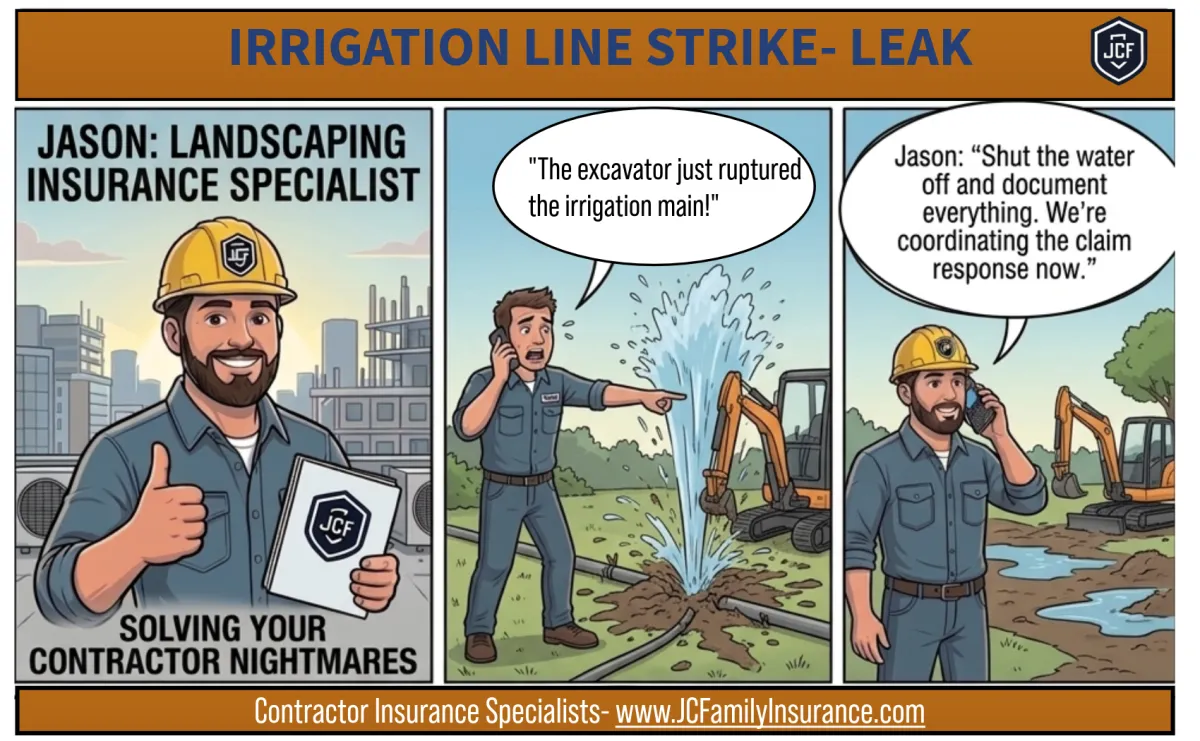
Irrigation Line
Strike
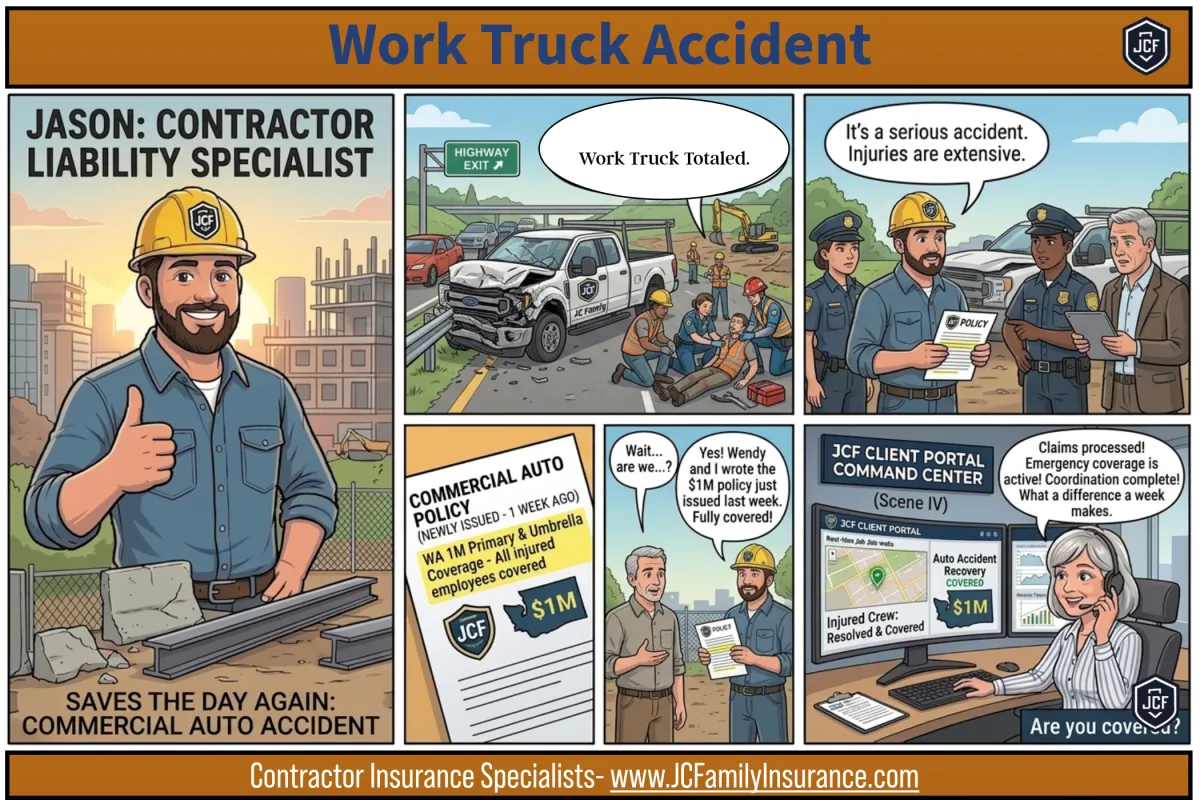
Work Truck
Accident
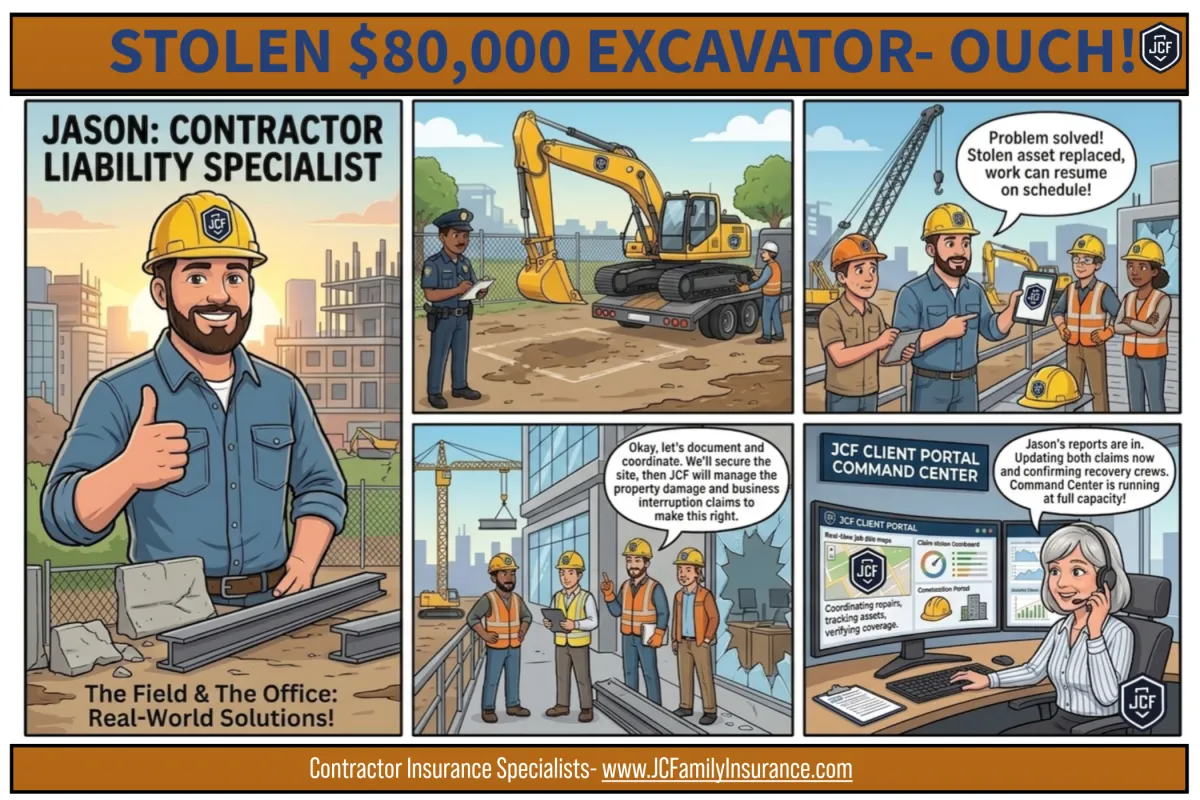
Stolen
Excavator
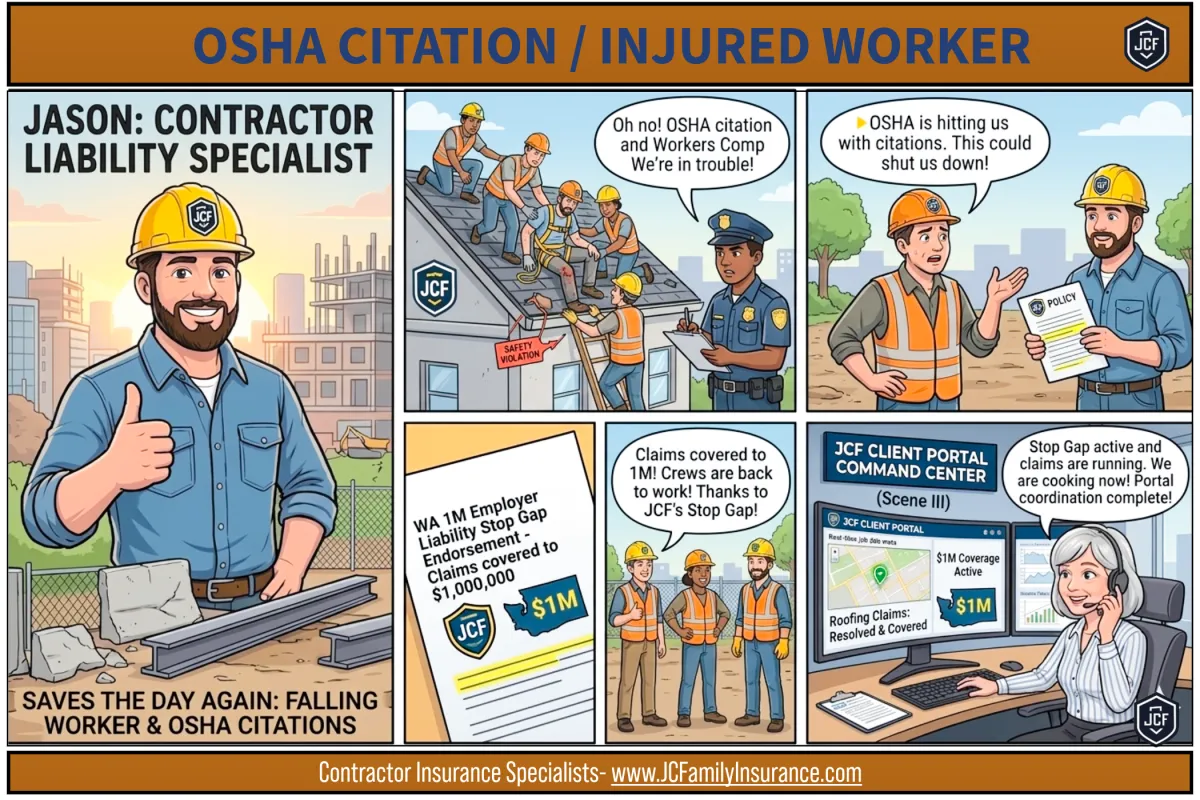
OSHA
Citation
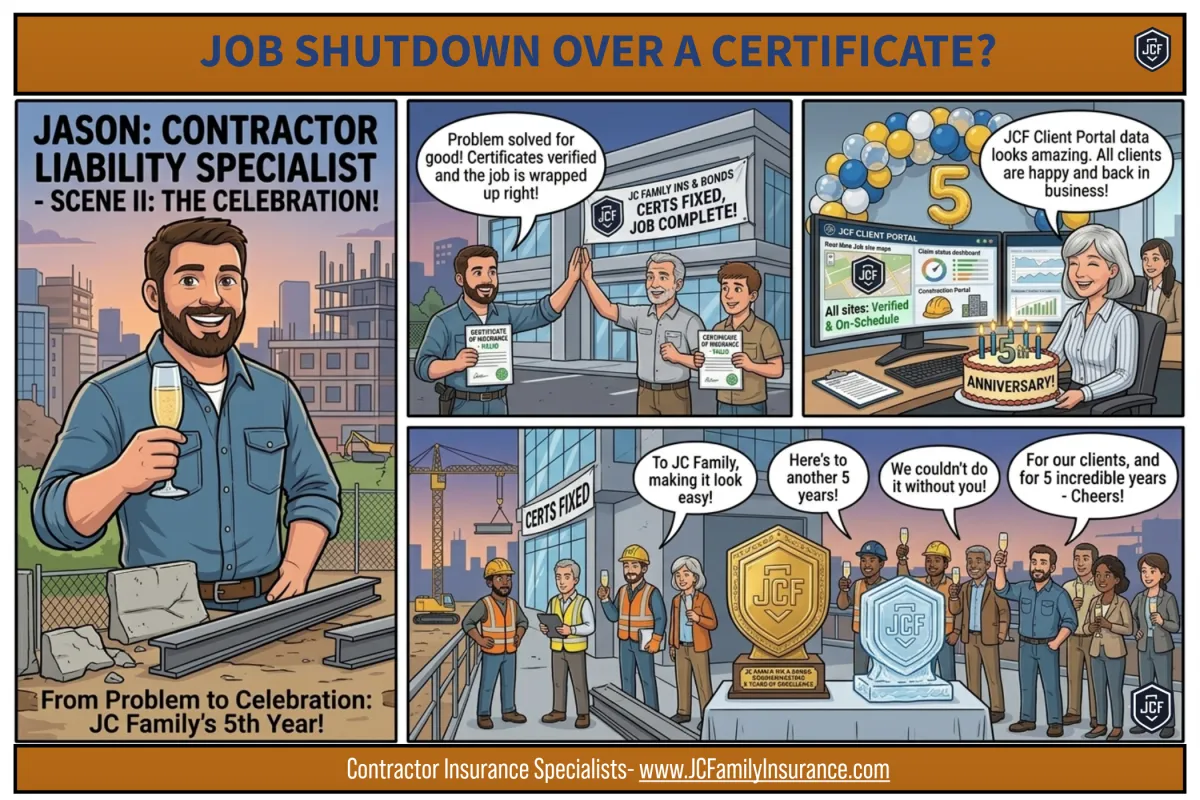
BAD
Certificate
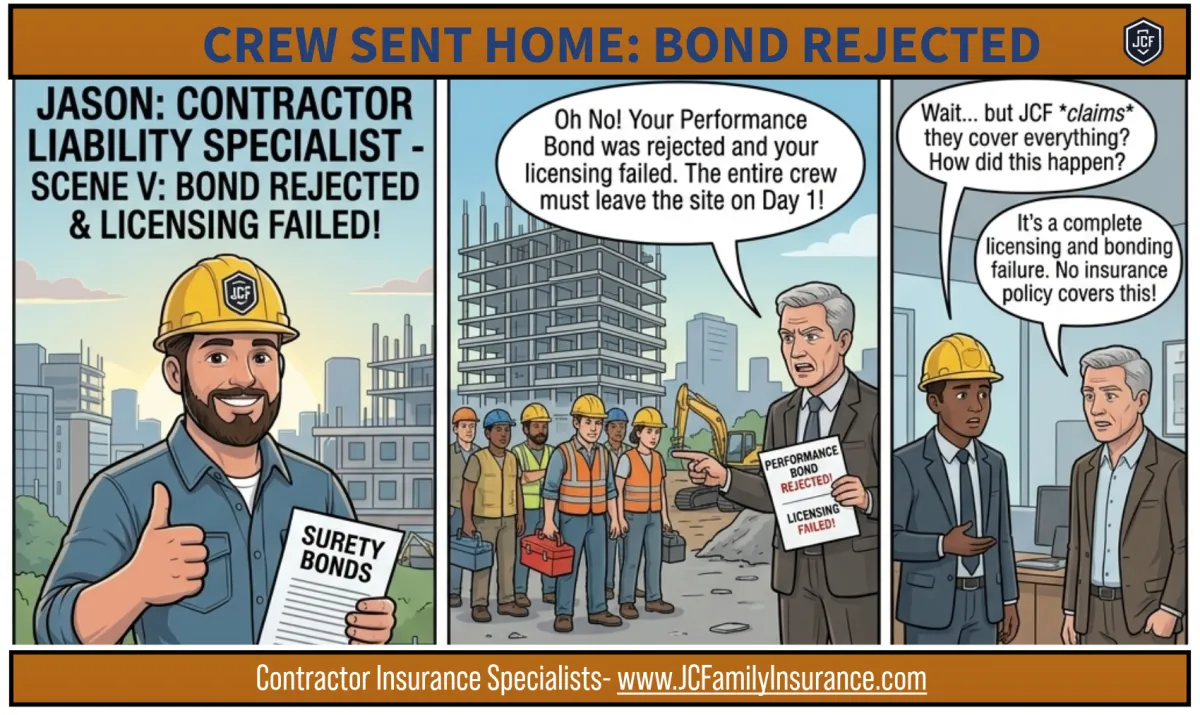
Bond
Rejected
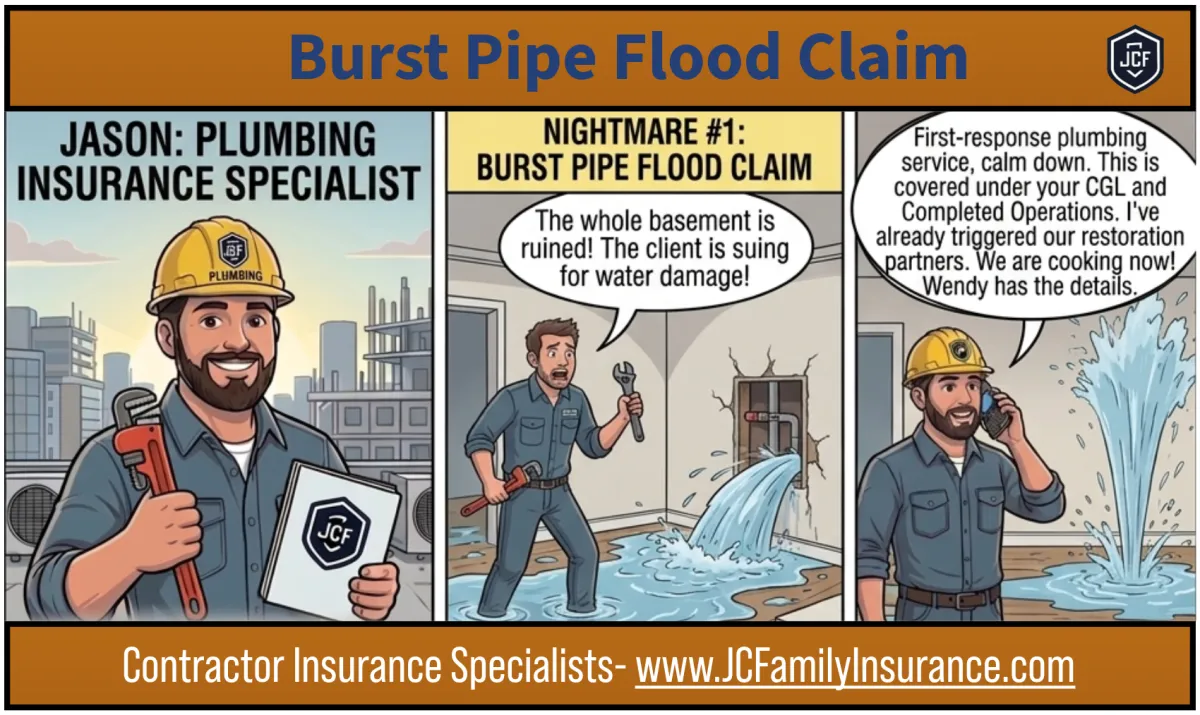
Burst Pipe
Flood Claim
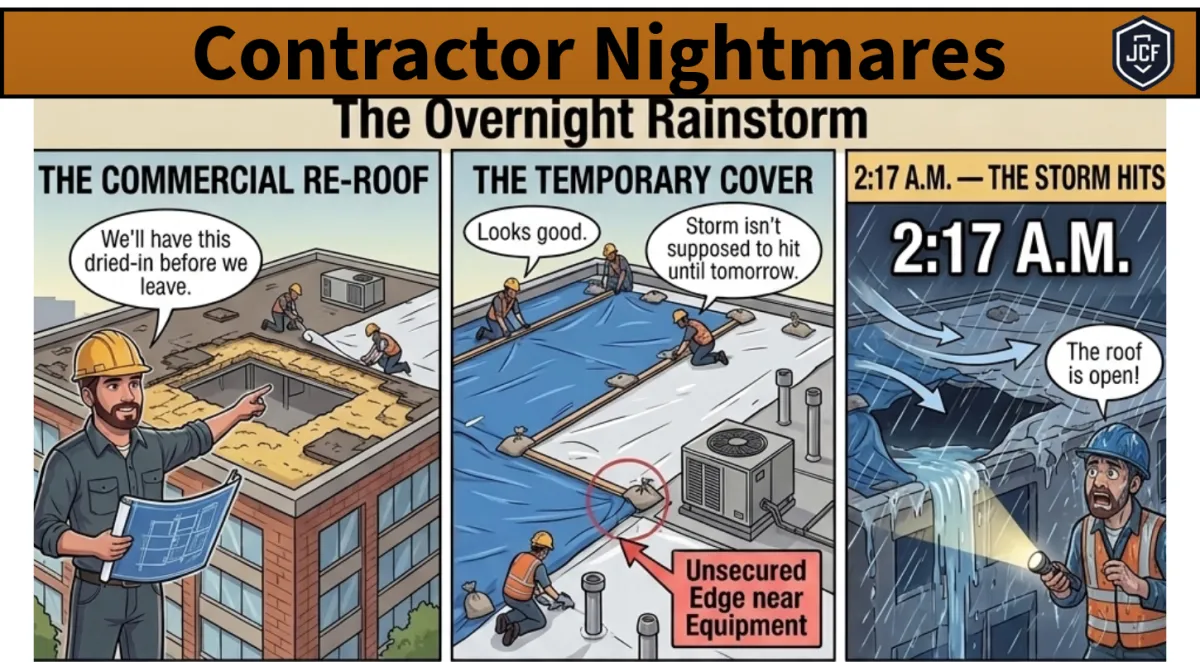
The Overnight Rainstorm
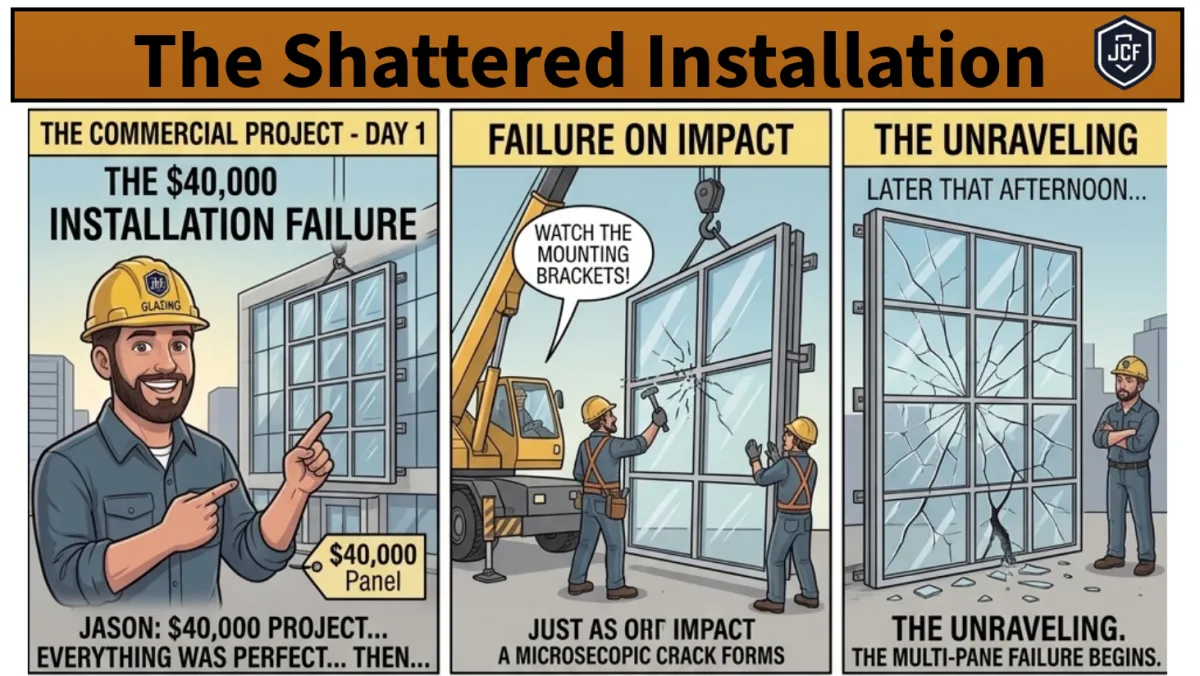
The Shattered
Installation
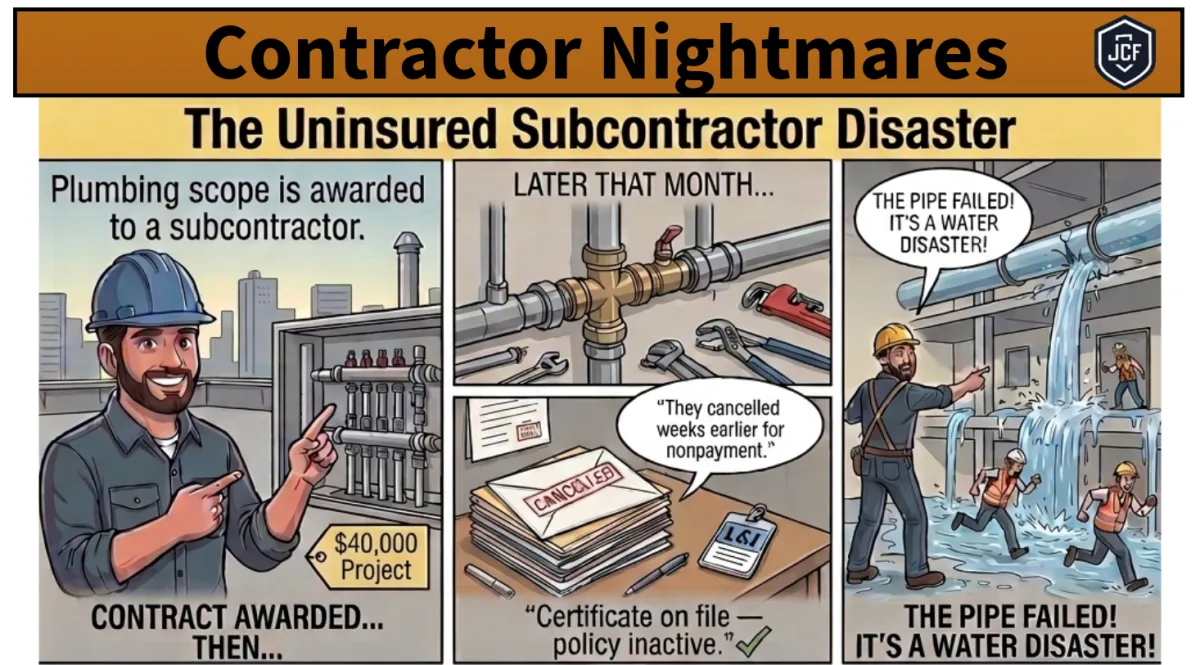
The Uninsured
Subcontrator
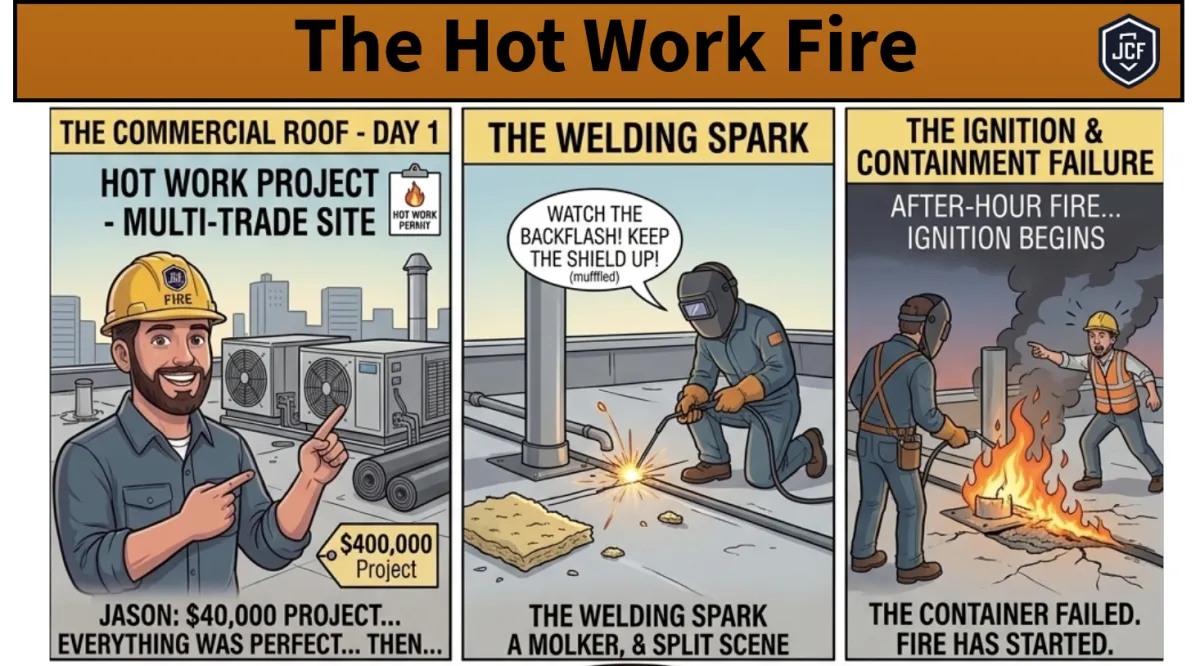
The Hot Work
Fire
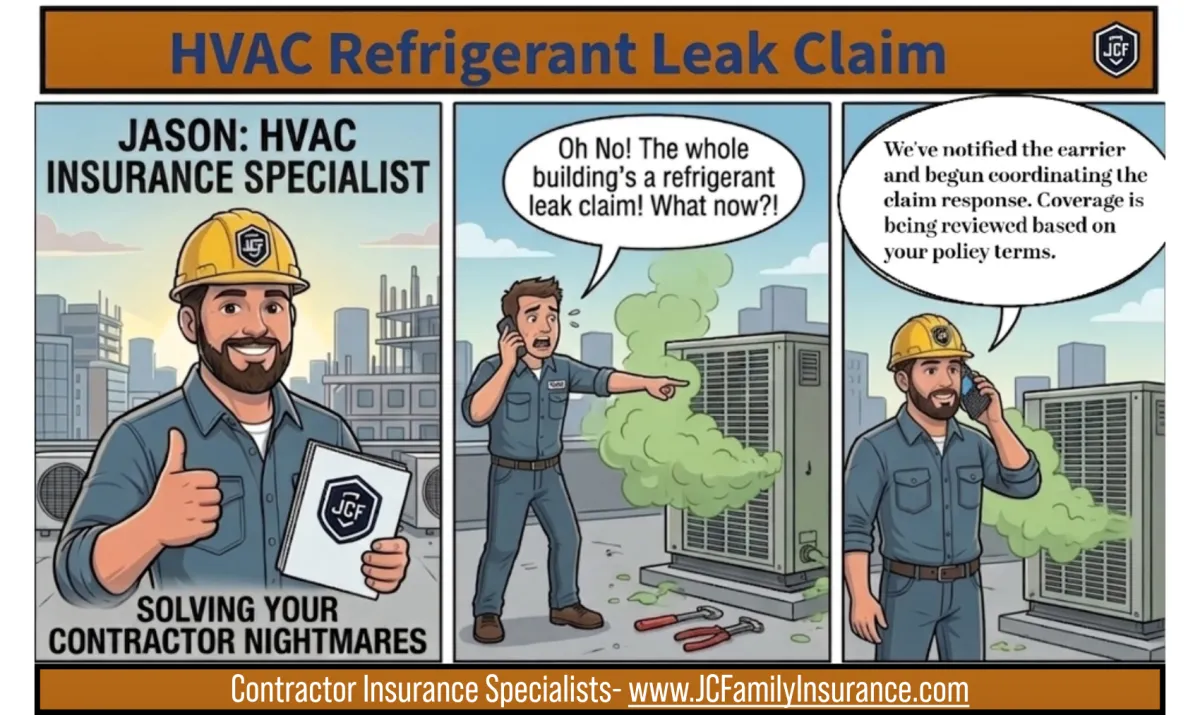
Refrigeration Line
Leak
COMING SOON
COMING SOON
COMING SOON
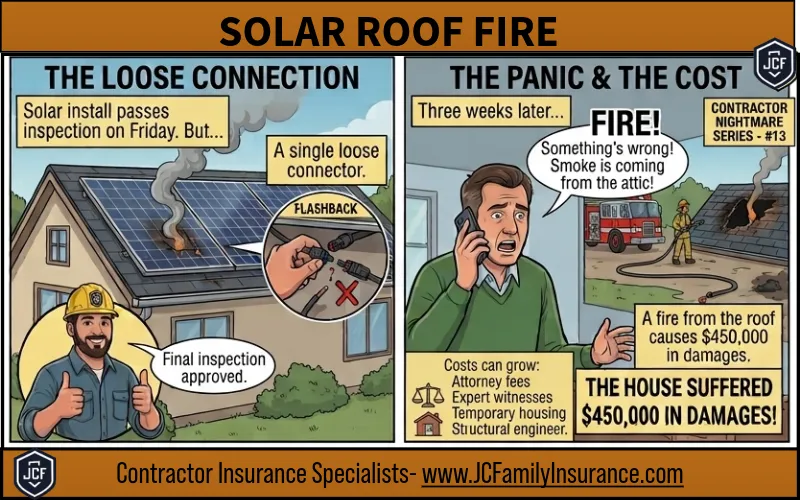
The Loose Connection
COMING SOON
COMING SOON
Find Insurance Resources for Your Contractor Trade
Find Insurance Resources for Your Contractor Trade
Contractor insurance is not one-size-fits-all. Select your trade below to explore common coverage needs, industry-specific risks, and insurance considerations for the work your business performs.
Contractor insurance is not one-size-fits-all. Select your trade below to explore common coverage needs, industry-specific risks, and insurance considerations for the work your business performs.
Explore Contractor Insurance By Trade
Find insurance solutions tailored to your trade. We help contractors across Washington, Oregon, and Idaho secure general liability, commercial auto, workers compensation, inland marine, and contractor bond coverage.
Don't see your trade listed? We insure nearly every licensed contractor trade in Washington, Oregon & Idaho. Get a fast quote today.
Don't see your trade? We insure nearly every licensed construction trade in the Pacific NW - Serving All of Washington, Oregon & Idaho.
Our Partner Insurance Providers
Insurance Markets & Industry Partners























































































Common Questions Answered
Answers to Frequently Asked Questions
What is builders risk insurance?
Builders risk is property insurance designed to protect covered buildings and property while they are under construction, renovation, or remodeling. Coverage varies by policy and project.
Is builders risk insurance required by law?
It is generally not a standard contractor licensing requirement, but a property owner, construction contract, lender, or financing agreement may require it.
Does builders risk cover theft?
Many policies can cover theft of insured construction materials, subject to policy terms, security requirements, exclusions, deductibles, and limits. Tools and equipment may require separate inland marine coverage.
Are materials stored away from the jobsite covered?
Temporary storage coverage may be included or added. The location, duration, property value, and storage conditions may need to be disclosed.
Does builders risk cover faulty workmanship?
The cost of correcting faulty work is commonly excluded or limited. Some forms may cover resulting damage to otherwise covered property. The actual policy language controls.
Does builders risk include general liability?
No. Builders risk is primarily property coverage. Contractors and project owners may need separate general liability coverage for bodily injury and third-party property damage claims.
When does builders risk coverage end?
Coverage may end upon expiration, completion, acceptance, occupancy, sale, abandonment, or when the property is put to its intended use. Termination provisions differ among policies.
How long does a builders risk policy last?
Policies are commonly written around the estimated construction period. Extensions may be available if the project is delayed, but they are not automatic and should be requested before expiration.
Who is responsible for purchasing builders risk insurance?
The owner, general contractor, or developer may be responsible. The construction contract and lender requirements should identify who must purchase the policy.
How much builders risk coverage do I need?
Policies are commonly written using the project’s completed value, which may include materials, labor, overhead, and profit. Land value is generally not included. The correct valuation method depends on the policy and project.
Does builders risk cover materials in transit?
It can cover qualifying construction materials and supplies while being transported to a jobsite or temporary storage location. Transit limits, covered causes of loss and vehicle-security requirements vary by policy.
Does builders risk cover an existing structure during renovation?
Not automatically. Some policies cover only the new work. The existing structure may need to be specifically included or insured under separate property coverage.
Does builders risk cover rain or water damage?
It may cover certain accidental water damage, but coverage can depend on the cause, building enclosure, protective measures, and policy exclusions. Flood is commonly handled separately.
Can subcontractors be covered by the project policy?
A policy may include the interests of general contractors and subcontractors, but the contract and policy must be reviewed. Subcontractors should not assume their materials and work are protected.
Can I purchase coverage after construction has started?
Possibly, but projects already underway may receive additional underwriting scrutiny. The carrier will normally ask for the percentage completed, reason for delayed placement, current condition, and loss history.
Want to work with us?
Get contractor insurance, bonds, and certificates from a local team that understands how your business works.
CONTRACTOR INSURANCE
INSURANCE BY TRADE
CONTRACTOR RESOURCES
TOOLS & POLICY CENTER
ABOUT JCF
GET HELP
WA · OR · ID
CONTACT INFORMATION
(971) 412-4469
9020 SW Washington Sq Rd Portland, OR 97223
CONNECT WITH JCFAMILY INSURANCE
FOLLOW & REVIEW US ONLINE