
























Contractor General Liability Insurance
Protecting contractors from third-party property damage, bodily injury, completed operations claims, and contractual liability across Oregon, Washington & Idaho.
Contractor General Liability Insurance
Protecting contractors from third-party property damage, bodily injury, completed operations claims, and contractual liability across Oregon, Washington & Idaho.
Because One Accident Shouldn't Put Your Business at Risk
Whether you build homes, install electrical systems, pour concrete, frame commercial buildings, weld structural steel, remodel kitchens, or install storefront glass, every contractor faces liability risks every day.
A customer's property can be damaged.
-A visitor can be injured.
-A completed project can fail months later.
-One unexpected lawsuit can threaten everything you've built.
Contractor General Liability Insurance
(often called Commercial General Liability or CGL Insurance) helps protect contractors from many of the most common third-party liability claims that arise during construction and after a project is completed.
Serving contractors throughout Oregon, Washington, and Idaho.
Because One Accident Shouldn't Put Your Business at Risk
Whether you build homes, install electrical systems, pour concrete, frame commercial buildings, weld structural steel, remodel kitchens, or install storefront glass, every contractor faces liability risks every day.
A customer's property can be damaged.
-A visitor can be injured.
-A completed project can fail months later.
-One unexpected lawsuit can threaten everything you've built.
Contractor General Liability Insurance
(often called Commercial General Liability or CGL Insurance) helps protect contractors from many of the most common third-party liability claims that arise during construction and after a project is completed.
Serving contractors throughout OR WA, and ID
What Is Contractor General Liability Insurance?
PROTECTION FOR YOUR BUSINESS FROM:
🛡️ Third-Party Property Damage
👷 Bodily Injury
⚖️ Legal Defense
🏗️ Completed Operations
📄 Contractual Liability
🏢 Products & Completed Operations
What Is Contractor General
Liability Insurance?
PROTECTION FOR YOUR BUSINESS FROM:
🛡️ Third-Party Property Damage
👷 Bodily Injury
⚖️ Legal Defense
🏗️ Completed Operations
📄 Contractual Liability
🏢 Products & Completed Operations
What Is Contractor General Liability Insurance?
Why Do I Need Contractor General Liability Insurance?
What Does Contractor General Liability Insurance Typically Cover?
What Does Contractor General Liability Insurance Typically Cover?
What Isn't Usually Covered?
Understanding what General Liability Insurance does not cover is just as important.
General Liability typically does not replace the need for:
❌ Workers' Compensation Insurance
Employee injuries are generally handled under Workers' Compensation.
❌ Commercial Auto Insurance
Company vehicles require Commercial Auto coverage.
❌ Contractor Equipment Insurance
Tools and equipment are commonly insured through Inland Marine policies.
❌ Professional Liability
Design errors or professional services may require Professional Liability coverage.
❌ Intentional Acts
Intentional misconduct is generally not covered.
Coverage depends on the specific policy language, endorsements, exclusions, and the facts of the claim.
Understanding Your Liability Limits
Most contractor General Liability policies display limits similar to:
COVERAGE
Each Occurence
General Aggregate
Personal & Advertising Injury
Medical Payments
Damage to Premises Rented
EXAMPLE LIMIT
$1,000,000
$2,000,000
$1,000,000
$5,000
$100,000
Choosing appropriate limits depends on your operations, contracts, project size, and customer requirements.
Liability Claims Contractors Face
Every contractor hopes they never experience a major claim—but claims happen every day.
Some of the most common include:
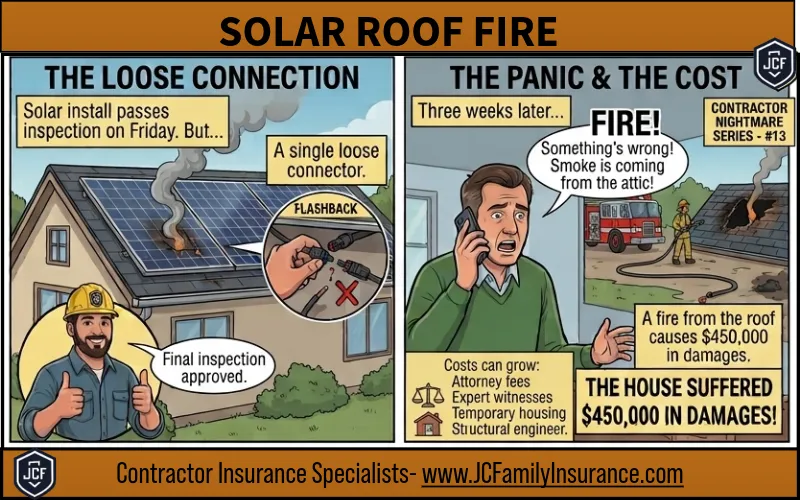
Fire damage
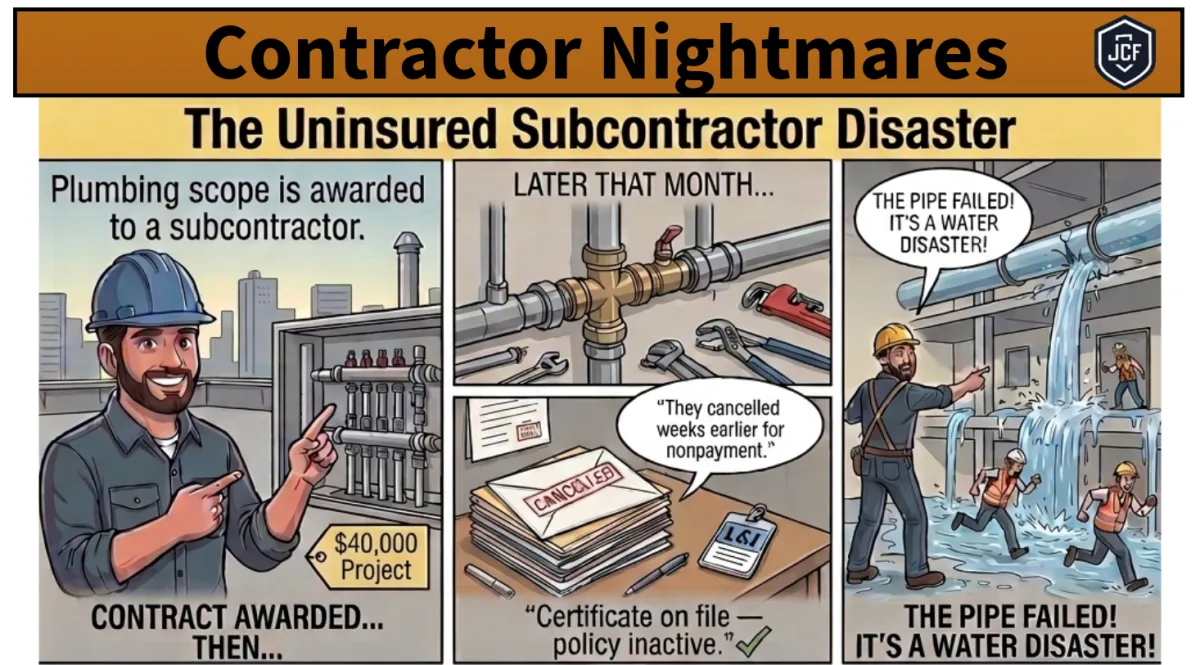
Water Damage
Property damage
Falling objects
Customer injuries
Damage caused by subcontractors
Equipment accidents
Completed operations claims
Jobsite lawsuits
Contract disputes
This is a Paragraph Font
Add a Title
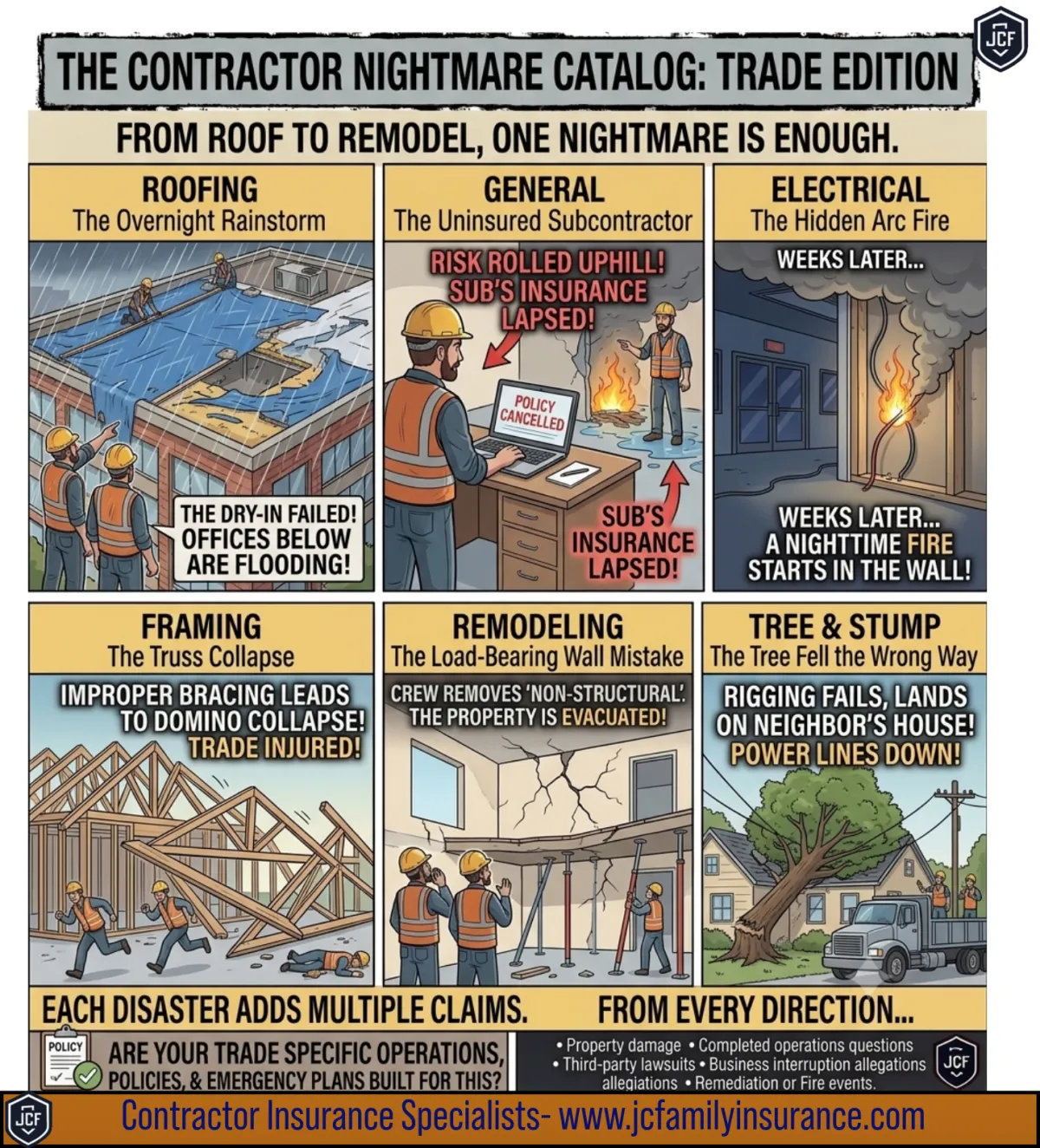
Real Contractor Nightmares
Insurance becomes easier to understand when you see how claims happen in the real world.
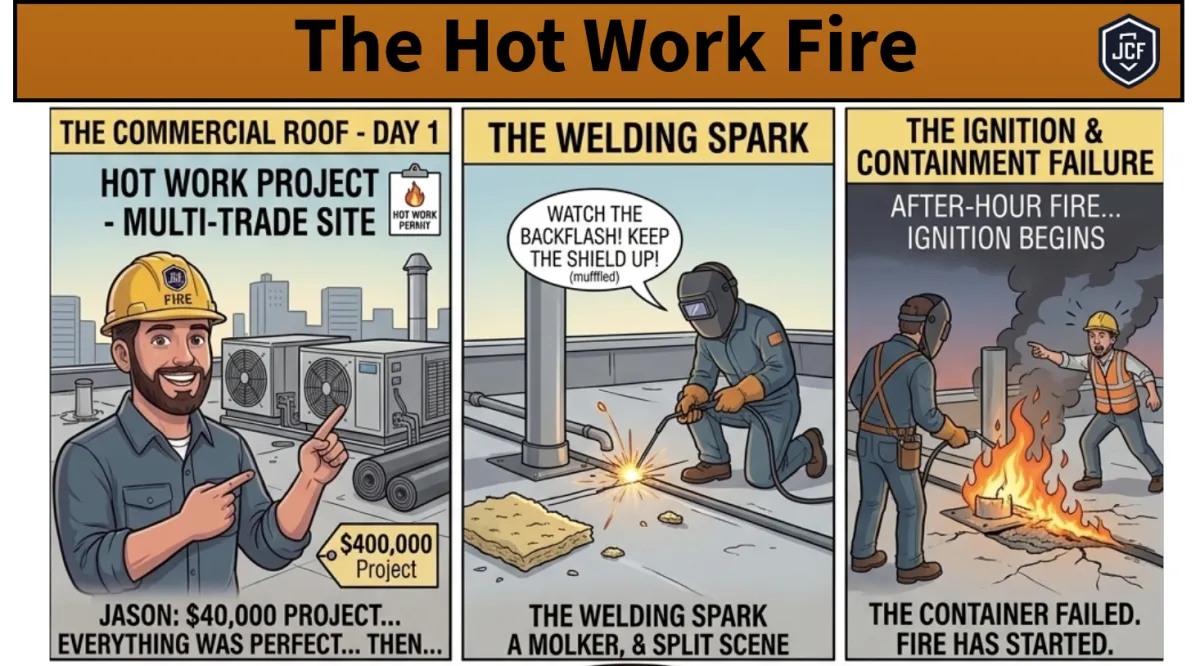
🔥 The Hot Work Fire
A single spark hidden behind a wall ignites hours later, causing extensive fire and smoke damage throughout a commercial building.
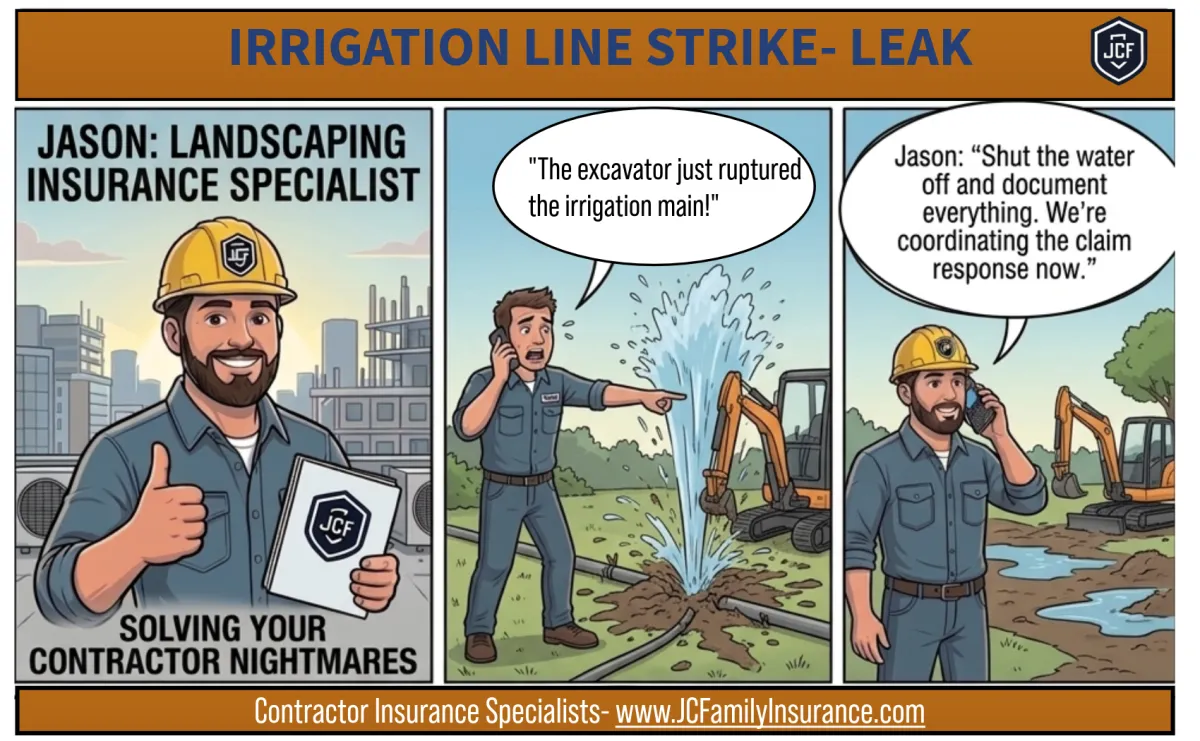
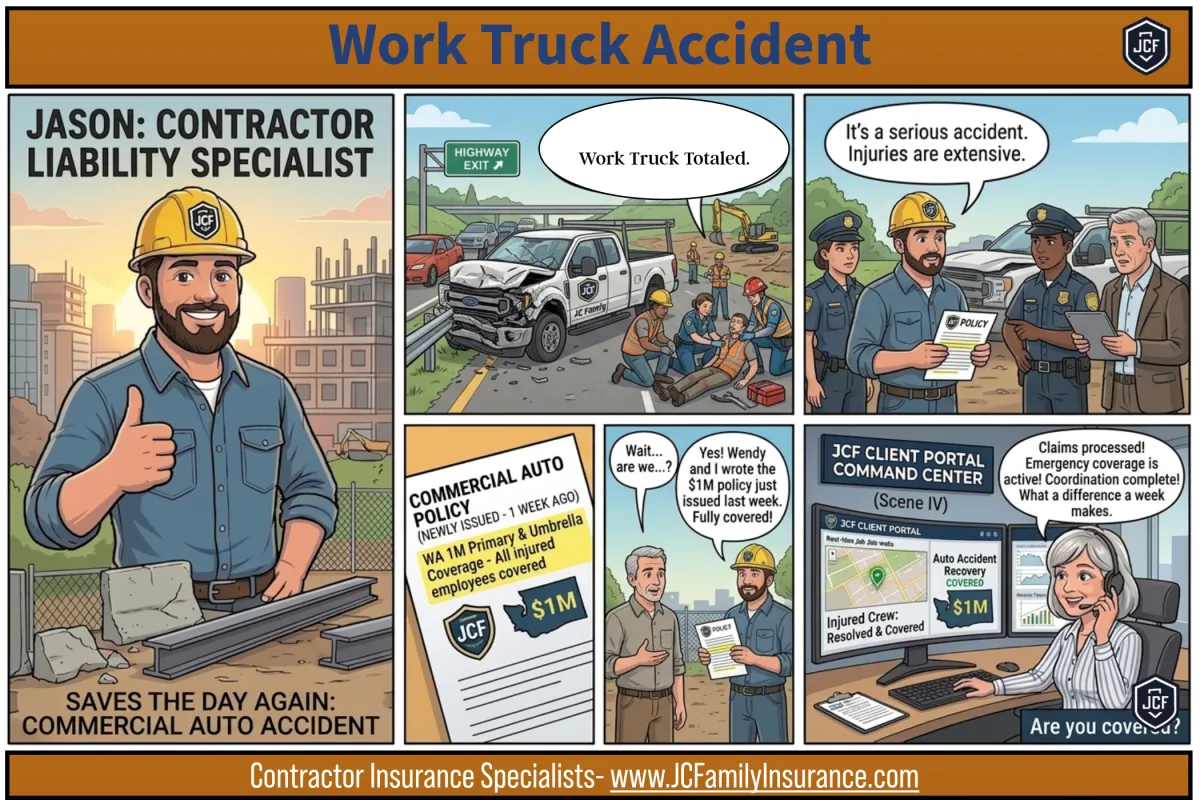
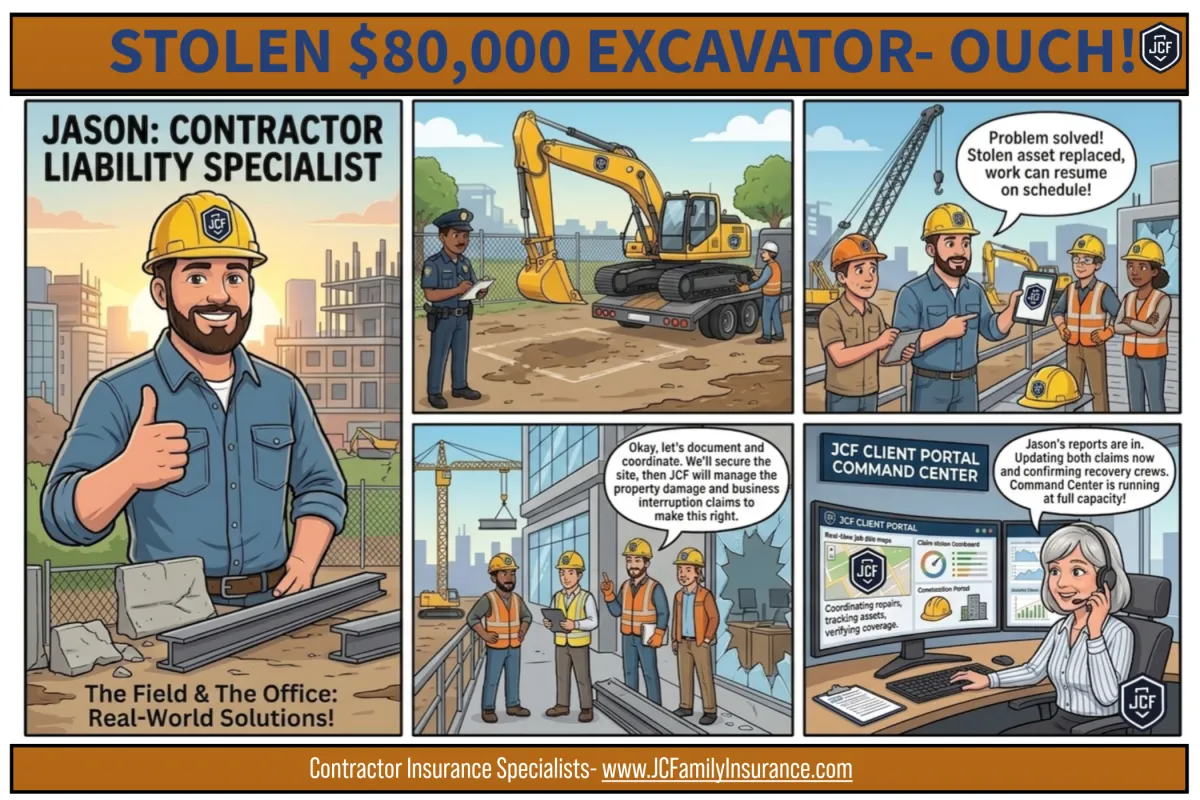
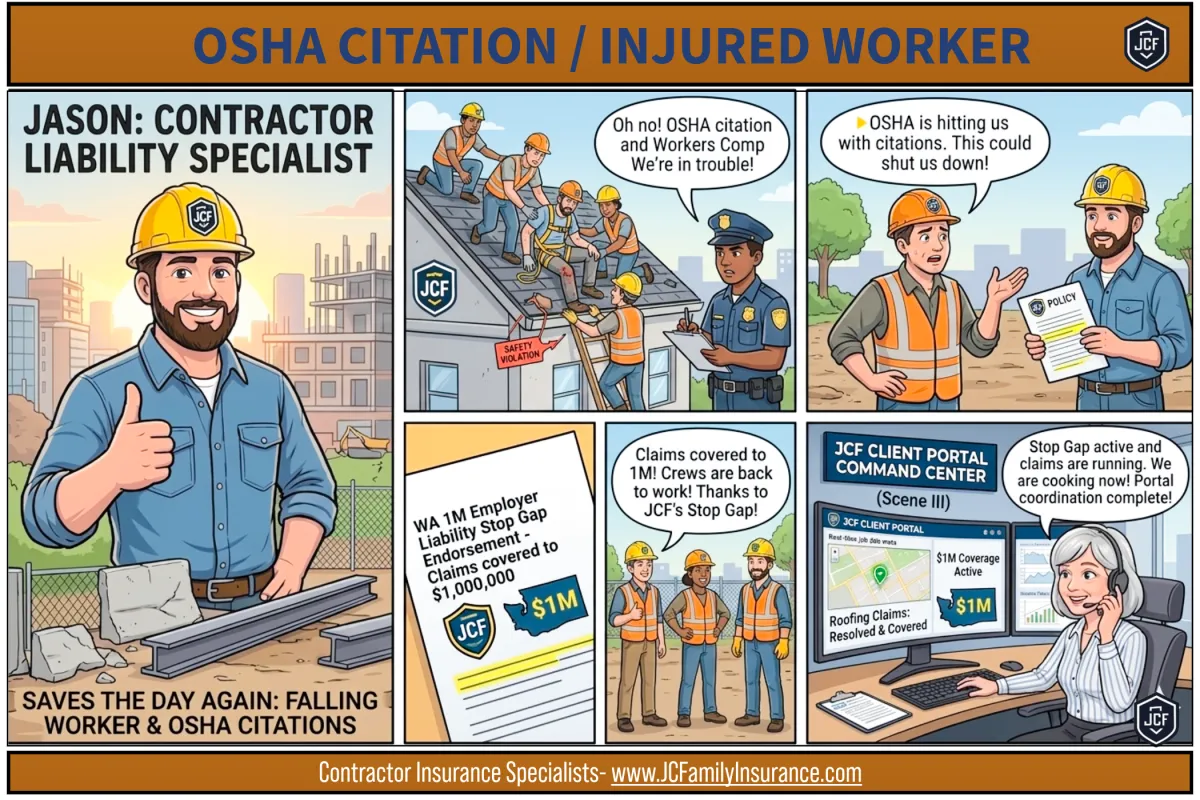
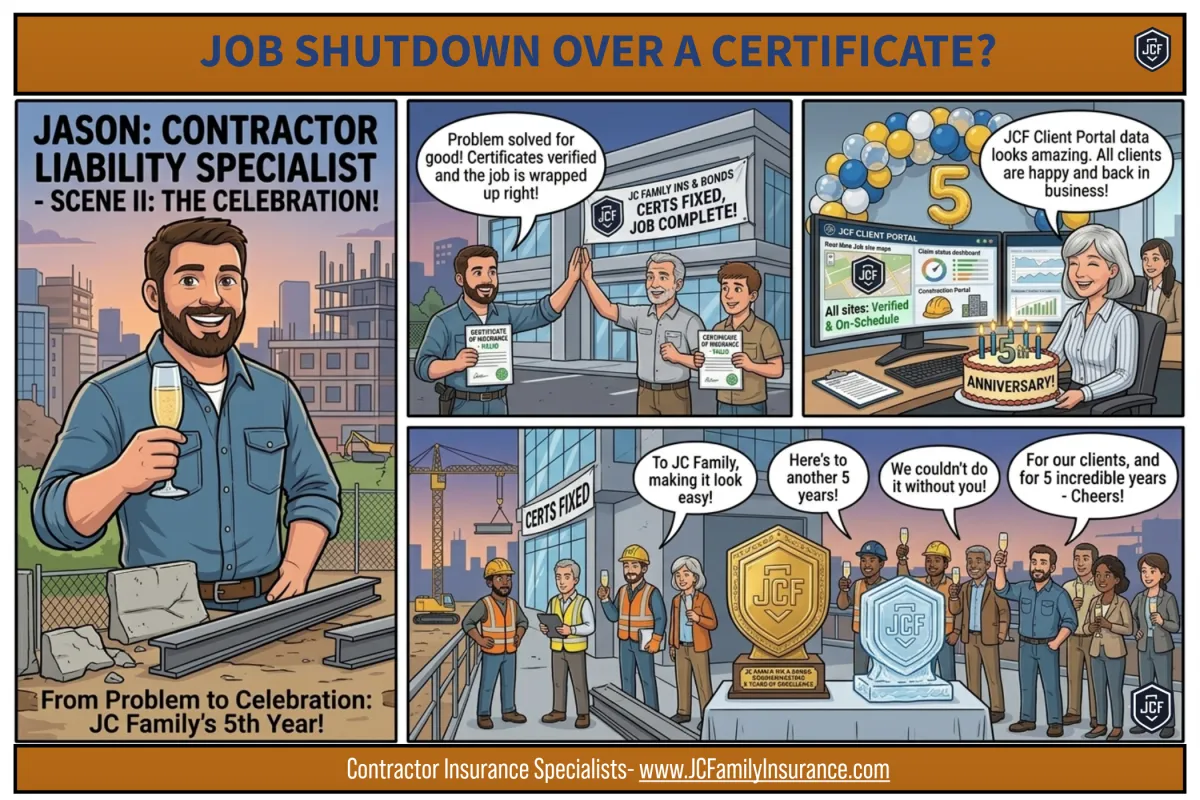
Explore Our Contractor Nightmares Series
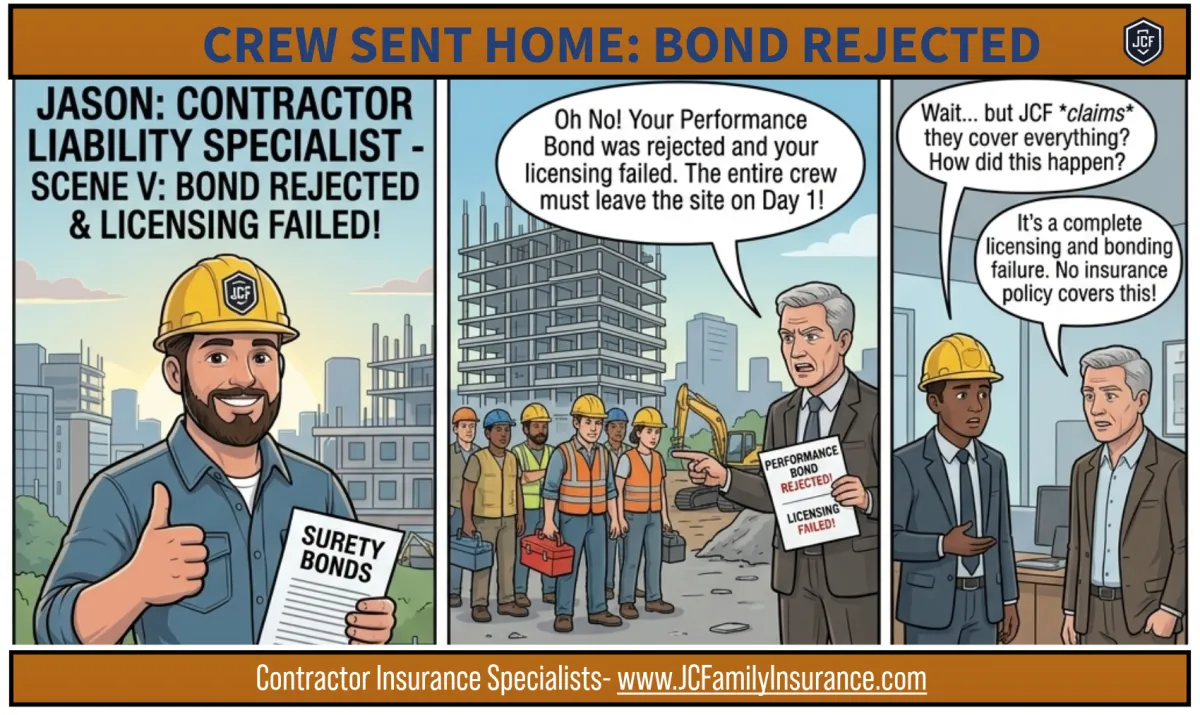
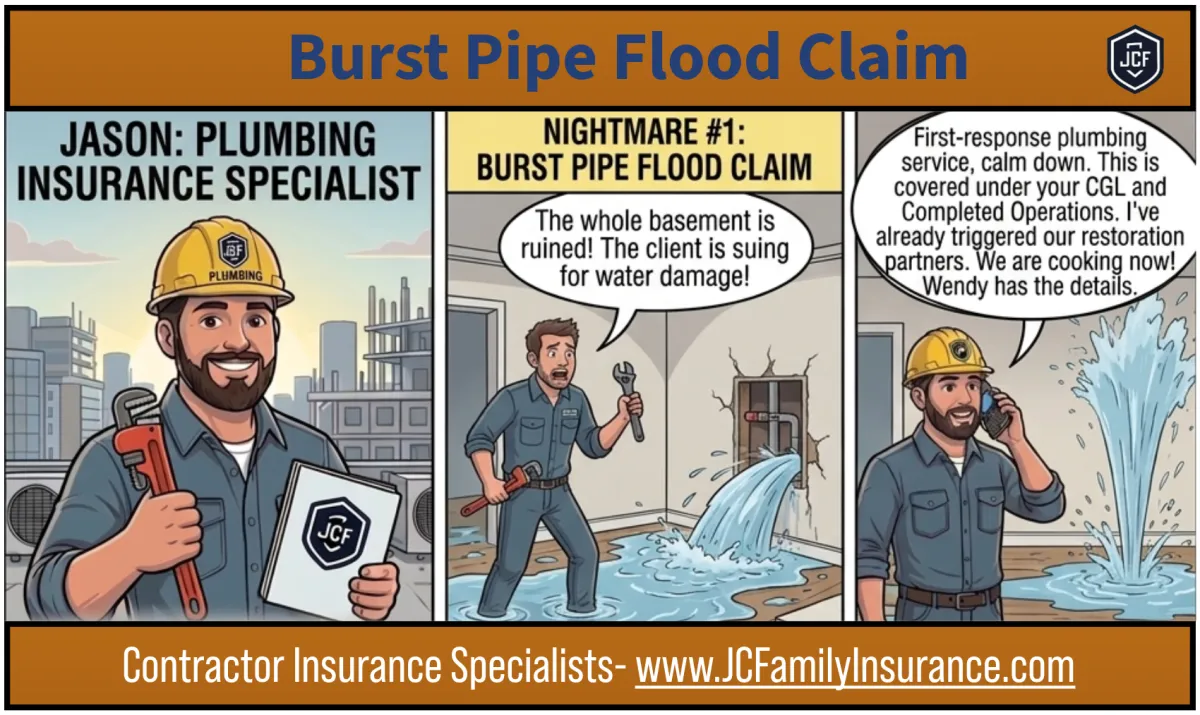
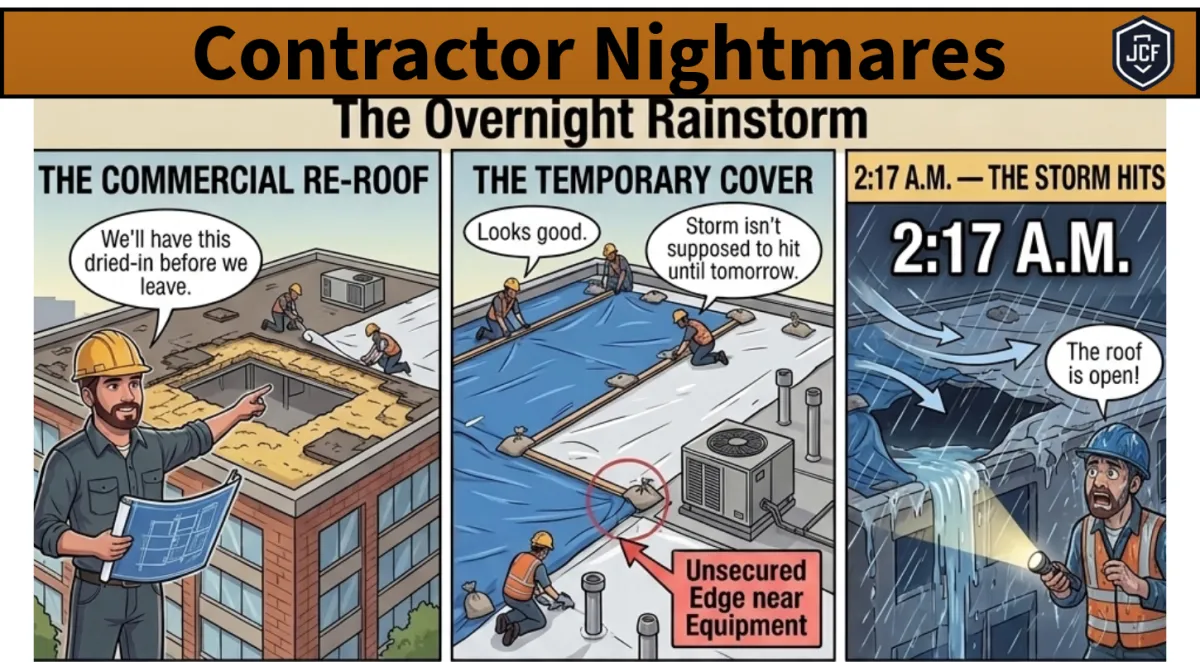
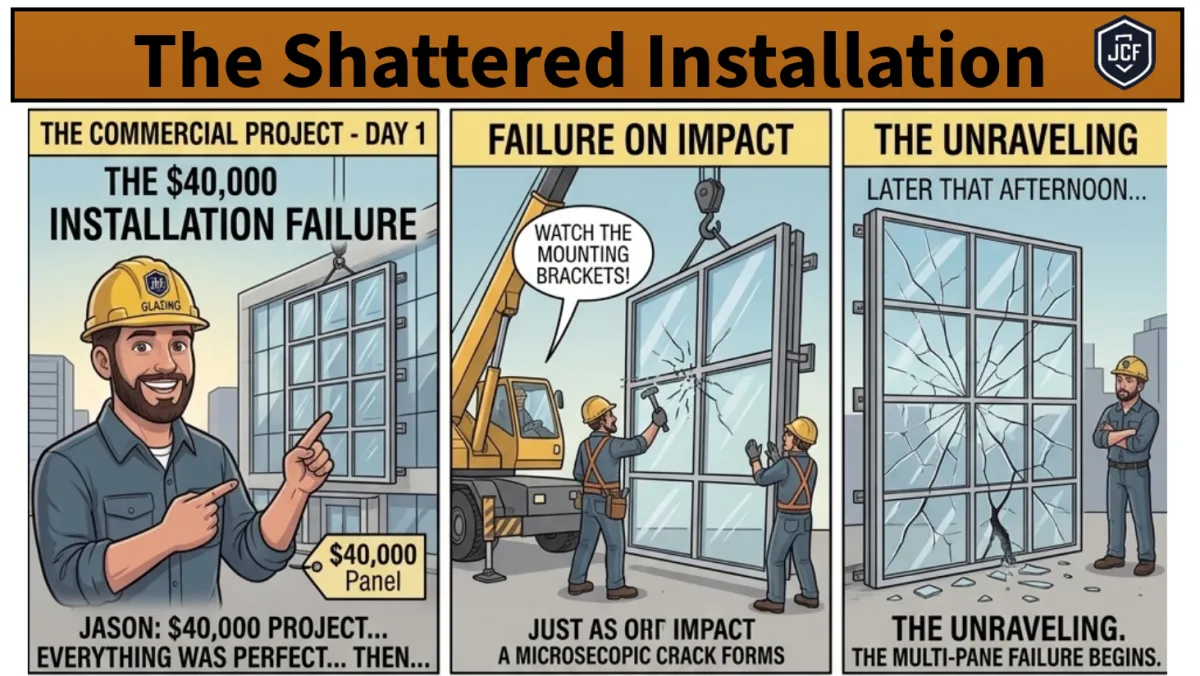
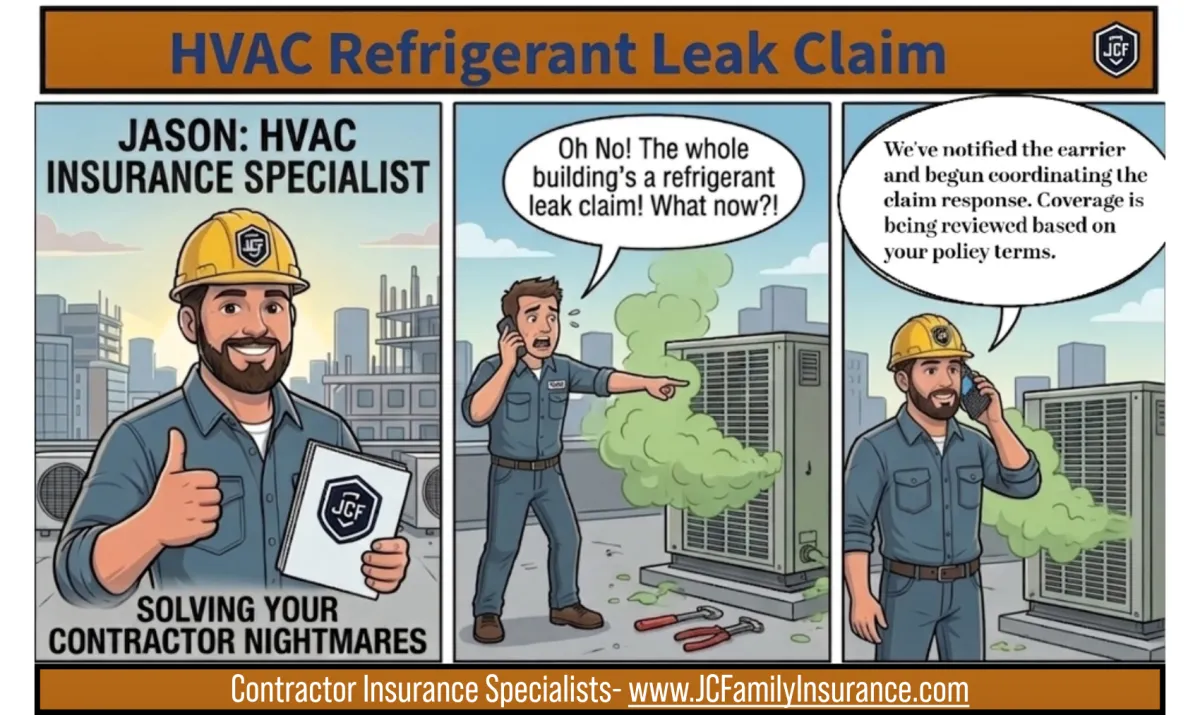
Common Risks Contractors Face — Real-World Claim Scenarios Explained in Our Contractor Nightmares Series
Explore More Contractor Nightmares
The JC Family Insurance Advantage
Modern tools. More options. Real contractor expertise.
Typical Insurance Experience
Limited Market Options
Phone-First & Fragmented Service
Documents Buried In Emails
Limited Payment Flexibility
Generalist Insurance Approach
Limited Contractor Education & Resources
JC Family Insurance
Compare Available Quote Options From Multiple Carriers
24/7 Digital Tools + Direct Human Support
Secure Online Policy & Document Center
Online Payments, Financing & Carrier Payment Access
Contractor-Focused Insurance & Surety Specialists
Licensing Guides, Bond Education, Contractor Resources & Real-World Claim Lessons
Get a Contractor Insurance Quote
Whether you're a new contractor or reviewing your current coverage, we
can help you compare options and identify potential coverage gaps.
Find Insurance Resources for Your Contractor Trade
Find Insurance Resources for Your Contractor Trade
Contractor insurance is not one-size-fits-all. Select your trade below to explore common coverage needs, industry-specific risks, and insurance considerations for the work your business performs.
Contractor insurance is not one-size-fits-all. Select your trade below to explore common coverage needs, industry-specific risks, and insurance considerations for the work your business performs.
Explore Contractor Insurance By Trade
Find insurance solutions tailored to your trade. We help contractors across Washington, Oregon, and Idaho secure general liability, commercial auto, workers compensation, inland marine, and contractor bond coverage.
Don't see your trade listed? We insure nearly every licensed contractor trade in Washington, Oregon & Idaho. Get a fast quote today.
Don't see your trade? We insure nearly every licensed construction trade in the Pacific NW - Serving All of Washington, Oregon & Idaho.
Who Needs Contractor
General Liability Insurance?
Almost every contractor should
consider General Liability Insurance.
Common Questions Answered
Answers to Frequently Asked Questions
What does contractor general liability insurance cover?
Contractor general liability insurance can cover qualifying third-party bodily injury, property damage, personal and advertising injury, and claims arising from ongoing or completed operations. Coverage depends on the policy terms, exclusions and circumstances of the claim.
How much general liability insurance does a contractor need?
Many contracts request limits of $1 million per occurrence and $2 million aggregate, but requirements vary. Larger projects may require higher limits, completed-operations coverage or excess liability insurance.
Is General Liability required for contractors?
Many customers, property owners, and general contractors require proof of General Liability insurance before work can begin.
What is an additional insured endorsement?
An additional insured endorsement can extend certain liability protection to another party, such as a general contractor or project owner. A certificate of insurance alone does not create additional insured coverage.
Does general liability cover tools, equipment or work vehicles?
Usually not. Tools and mobile equipment generally require inland marine coverage, while work trucks and qualifying business vehicles require commercial auto insurance.
Is general liability insurance required for contractors?
Requirements vary by state, license type, customer and project. Many contractors need general liability insurance to maintain registration, sign contracts, enter jobsites or satisfy a general contractor or property owner.
Does general liability cover faulty workmanship?
General liability generally does not pay to repair or replace the contractor’s own defective work. It may cover qualifying bodily injury or resulting damage to other property caused by faulty work, depending on the policy language.
Does contractor liability insurance cover completed work?
It can. Products-completed operations coverage addresses qualifying injury or property damage discovered after the contractor’s work has been completed. The policy must remain properly structured for this exposure.
What does primary and noncontributory mean?
Primary and noncontributory wording generally requires the contractor’s policy to respond before the additional insured’s policy and without seeking contribution from it, subject to the endorsement and policy terms.
How much does contractor general liability insurance cost?
Yes. We work with many markets that specialize in roofing, excavation, framing, concrete, tree service, and other higher-risk trades.
Want to work with us?
Get contractor insurance, bonds, and certificates from a local team that understands how your business works.