












Contractor Nightmare #11:
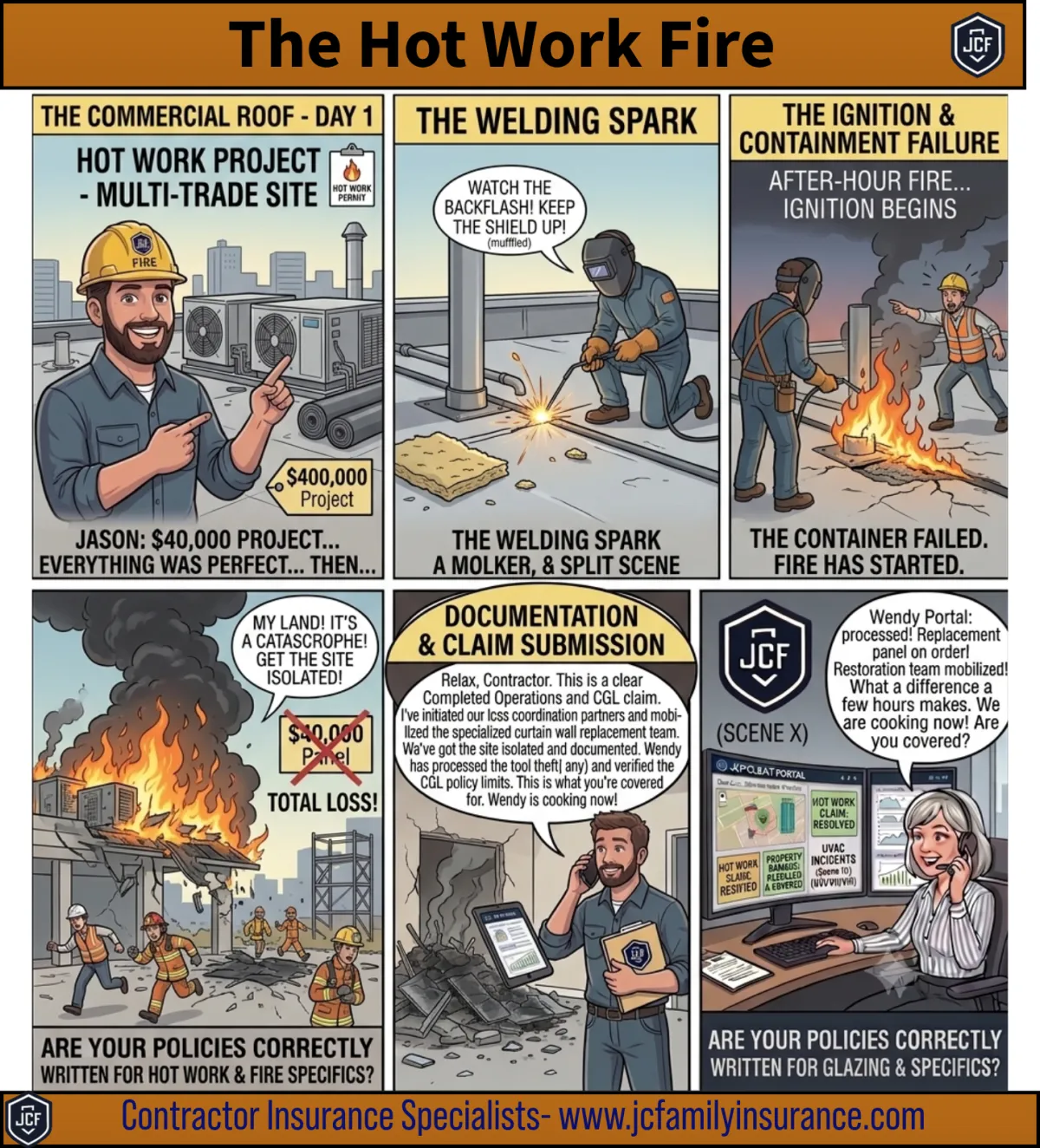
The Hot Work Fire
-One Spark Can Shut Down an Entire Project
Every day, contractors perform hot work involving welding, torch cutting, soldering, brazing, grinding, and other operations that generate heat or sparks. One unnoticed ember...One hidden combustible material...One missing fire watch......can turn a routine repair into a catastrophic commercial insurance claim.
Whether you're a welder, HVAC contractor, plumber, roofer, or metal fabricator, proper insurance and risk management matter before the first spark flies.
✓ Serving Contractors Across OR, WA & ID
✓ Same-Day Certificates Available
✓ Bonds • GL • Auto • Workers Comp List 1
✓ Trusted by 500+ Contractors
✓ Existing Policy Review Available
✓ Certificates • Claims • Coverage Analysis
Call or Text: (971) 364-3200
The Hot Work Fire
Insurance Coverage's Often Involved
✓ Commercial General Liability
✓ Products & Completed Operations
✓ Property Damage Liability
✓ Inland Marine / Contractor Equipment
✓ Commercial Umbrella Liability
✓ Workers' Compensation
✓ Business Auto
✓ Contractors Pollution (when applicable)
What Happened?
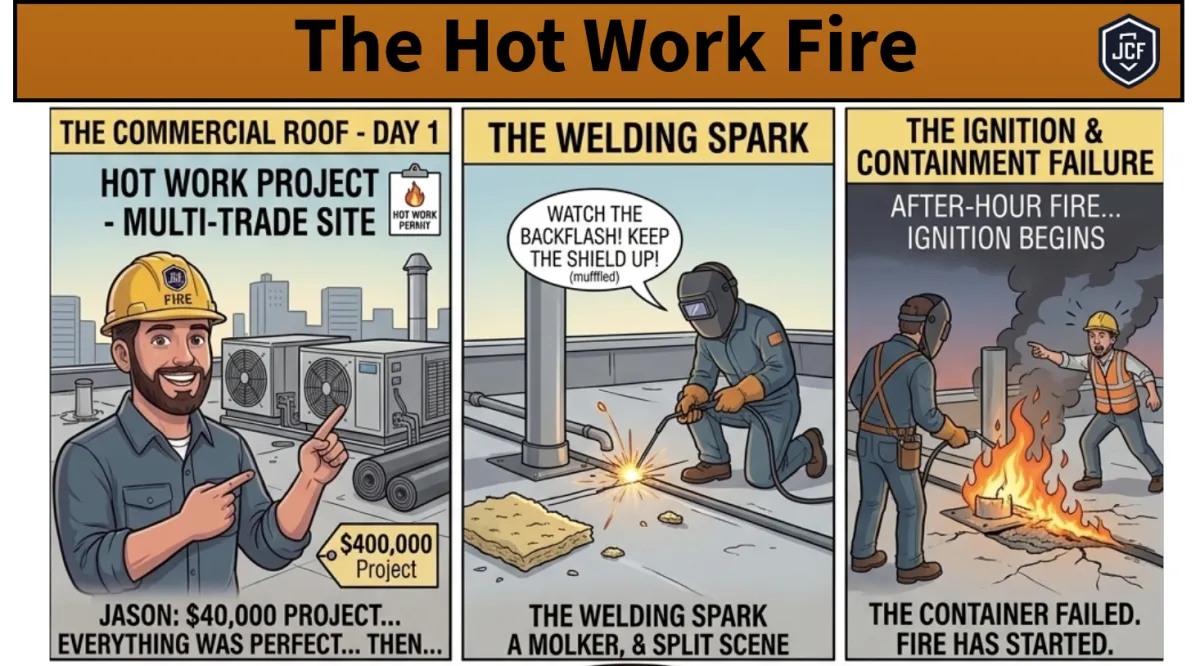
The contractor completed a routine welding repair inside a commercial building. Everything appeared normal when the crew packed up for the day. Unknown to the crew, a small spark had traveled behind a wall cavity and ignited combustible material hidden from view. Hours later, smoke filled the building.
By the time firefighters arrived, portions of the structure had suffered extensive fire, smoke, and water damage.
Why Hot Work Creates Serious Insurance Risks
Hot work is responsible for thousands of commercial fires every year.
Operations involving:
• Welding
• Cutting
• Grinding
• Brazing
• Soldering
• Roofing torches
• Plasma cutting
• Heat guns
all create ignition sources capable of starting fires long after work has ended.
Even a tiny ember can remain hidden for hours before igniting surrounding materials.
How JC Family Insurance Helps
We work with contractors throughout Oregon, Washington, and Idaho to help them compare insurance solutions designed around the work they actually perform.
Whether your business involves welding, mechanical work, plumbing, roofing, or steel fabrication, we can help review your operations, insurance requirements, and contractual obligations to identify coverage options that fit your business.
One small spark can quickly become a six or even seven-figure claim.
Explore Our Contractor Nightmares Series
Common Risks Contractors Face — Real-World Claim Scenarios Explained in Our Contractor Nightmares Series
Irrigation Line
Strike
Work Truck
Accident
Stolen
Excavator
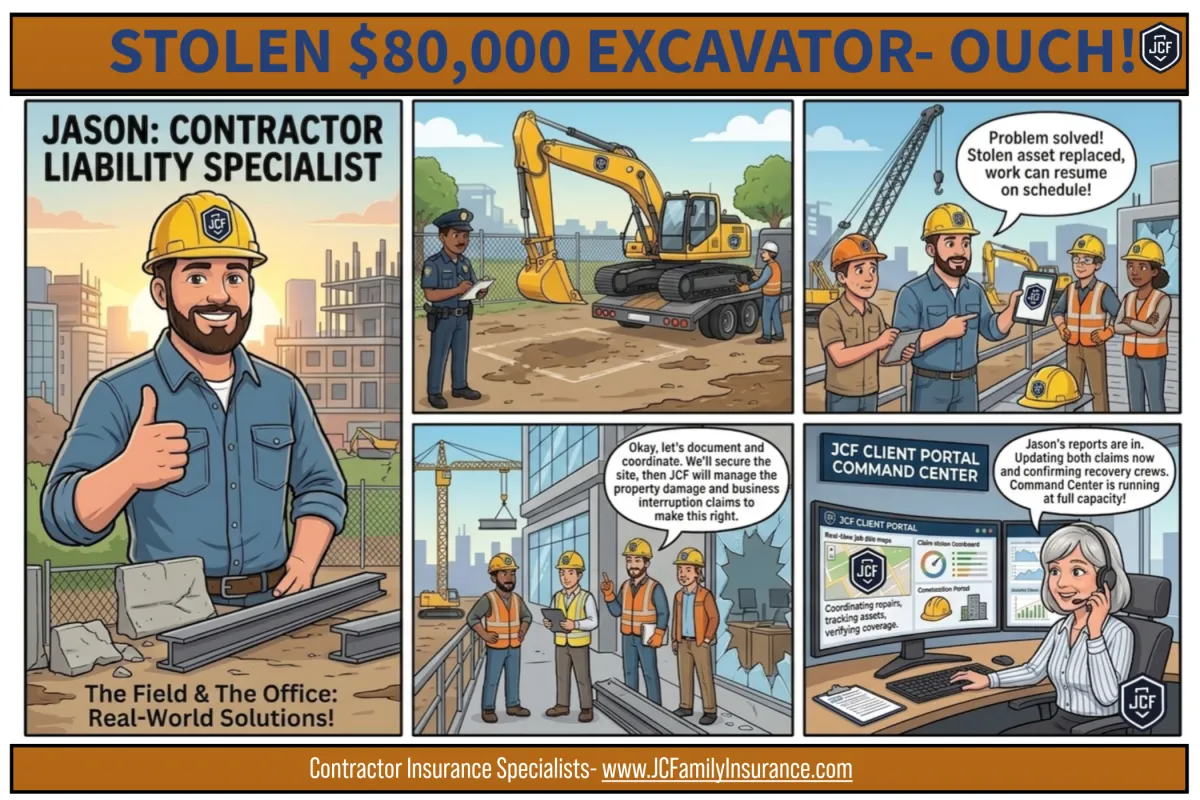
OSHA
Citation
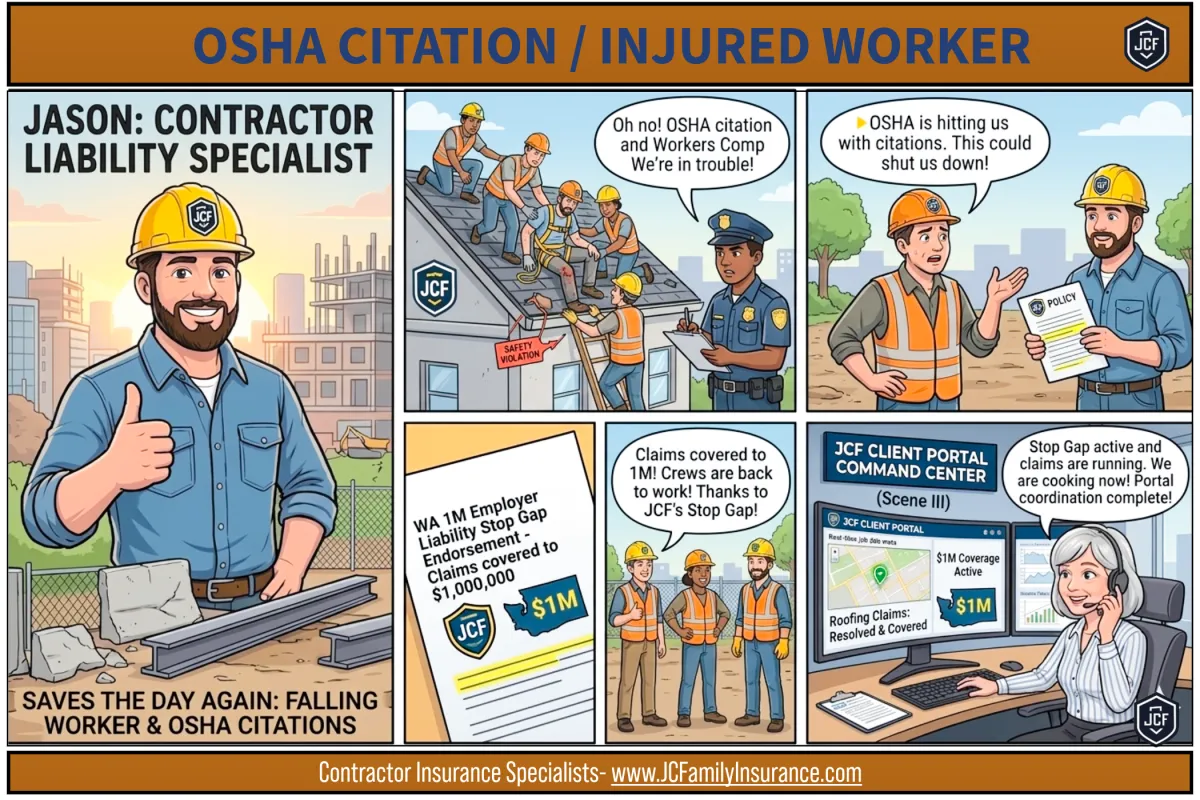
BAD
Certificate
Bond
Rejected
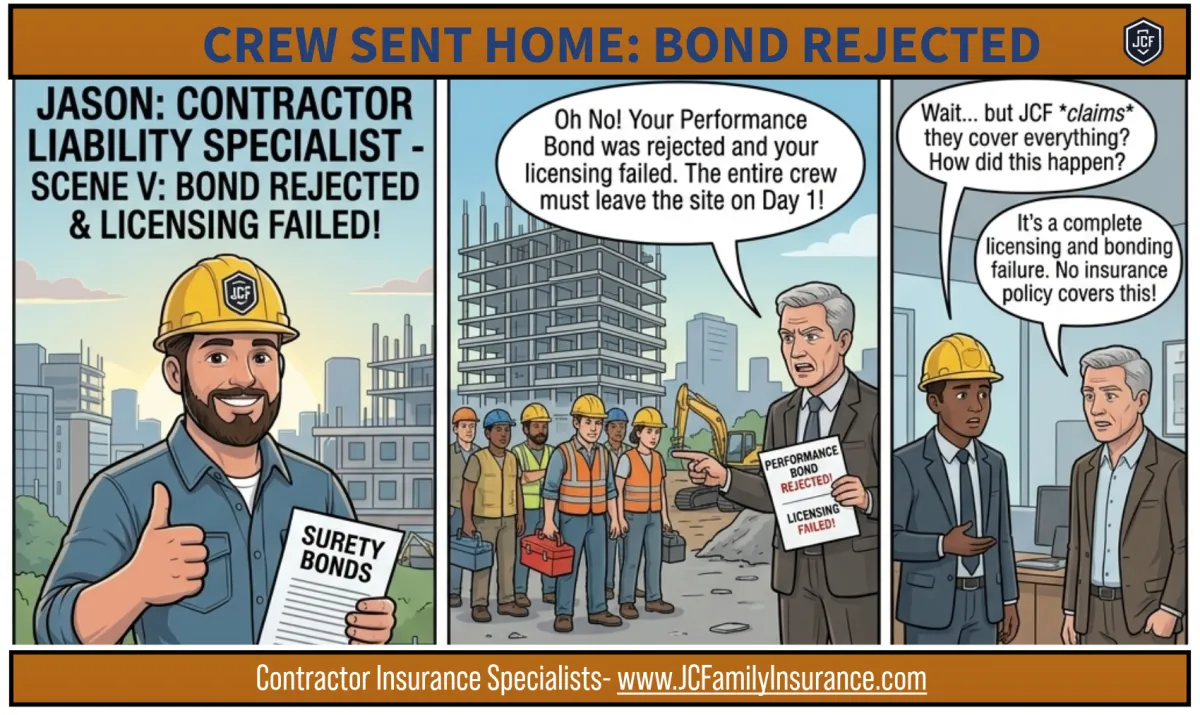
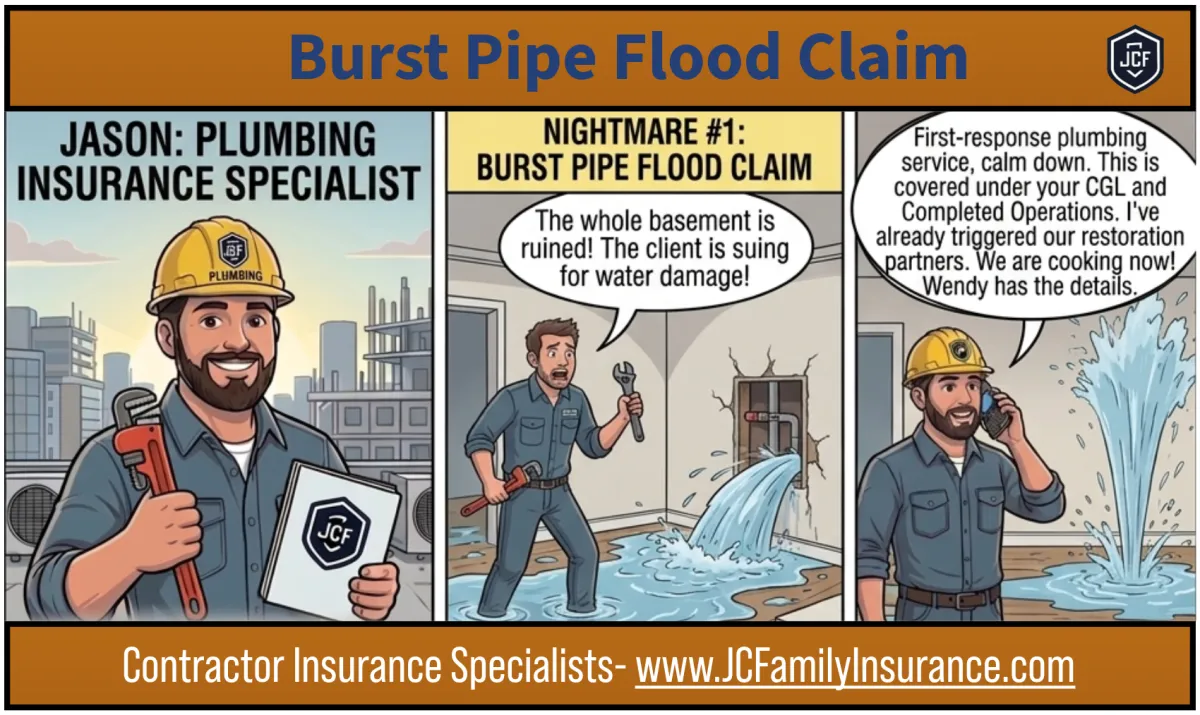
Burst Pipe
Flood Claim
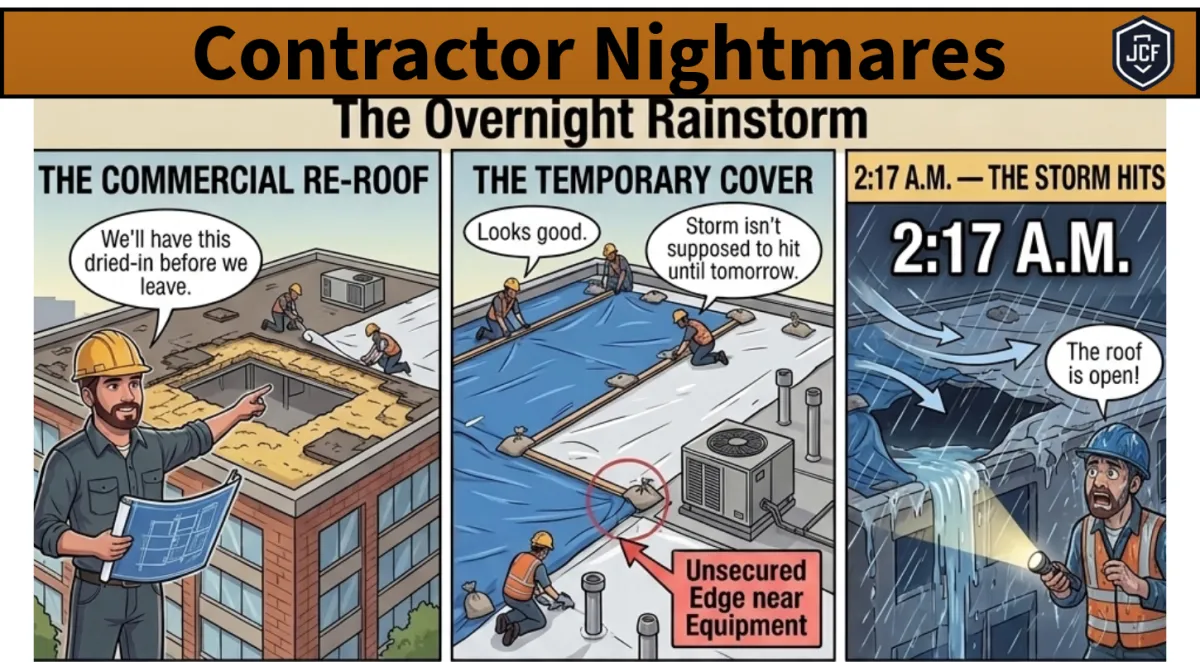
The Overnight Rainstorm
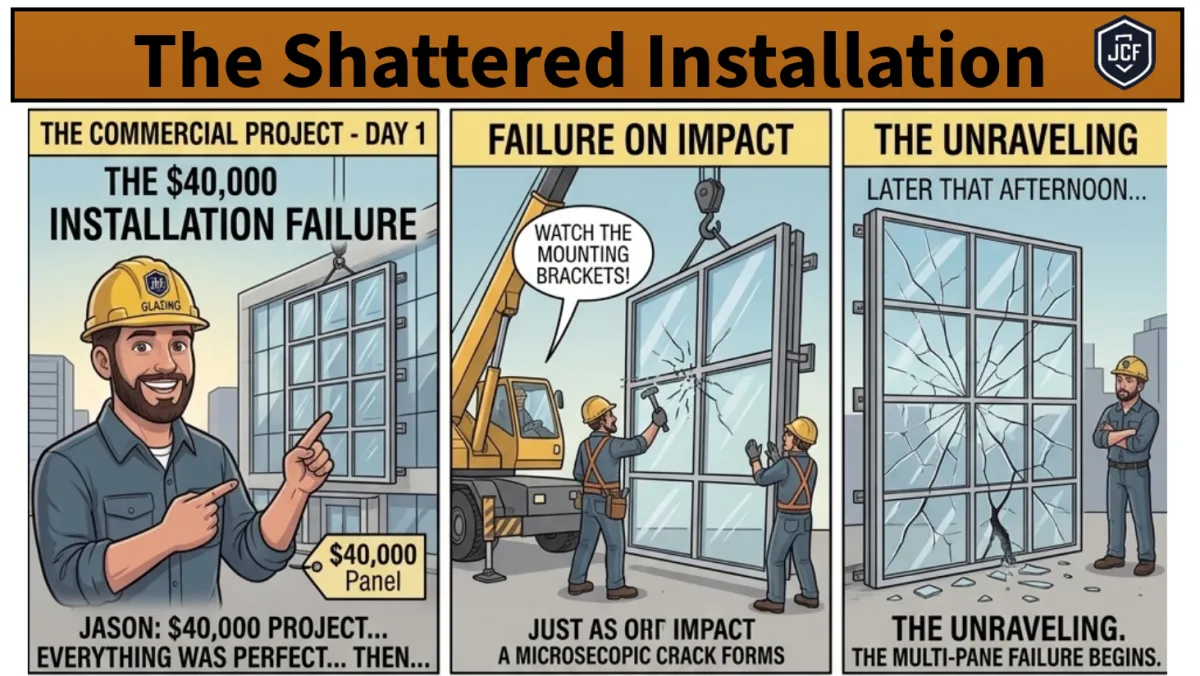
The Shattered
Installation
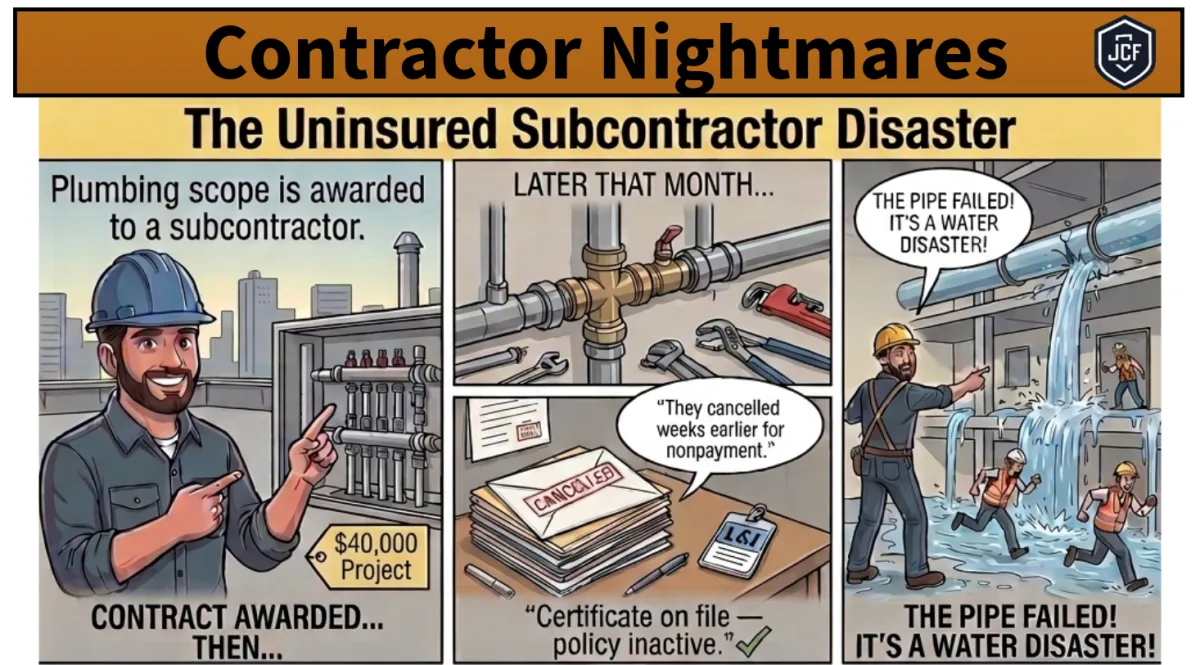
The Uninsured
Subcontrator
The Hot Work
Fire
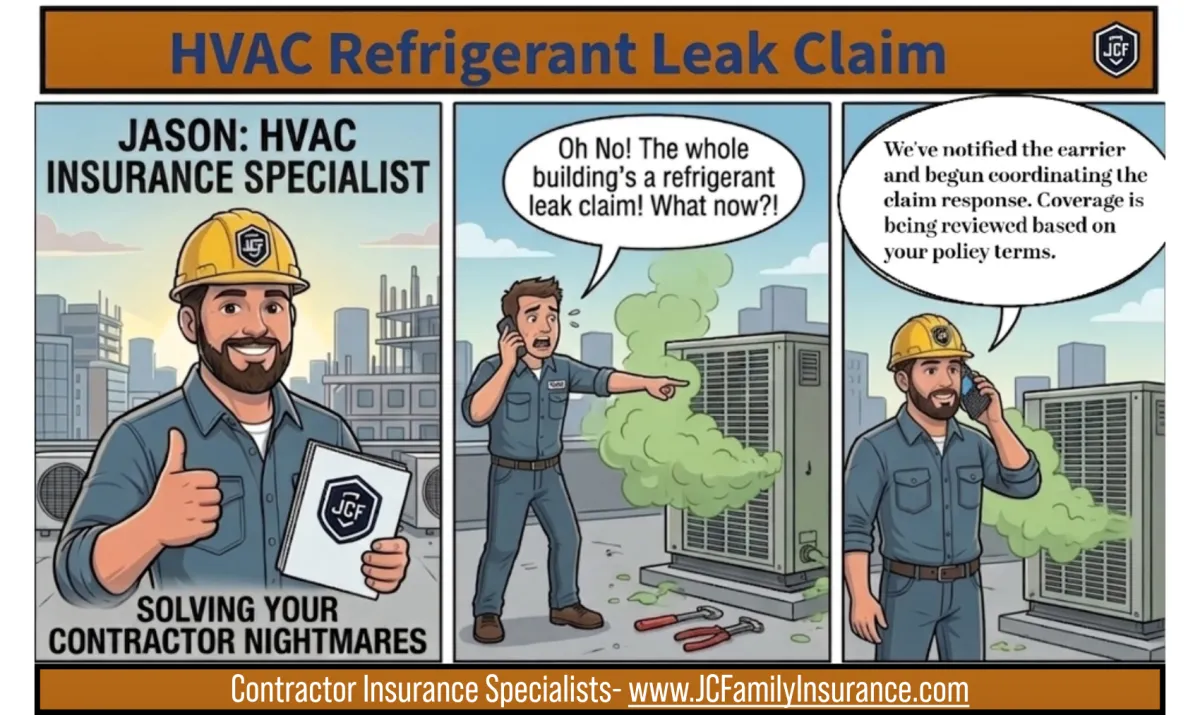
Refrigeration Line
Leak
COMING SOON
COMING SOON
COMING SOON
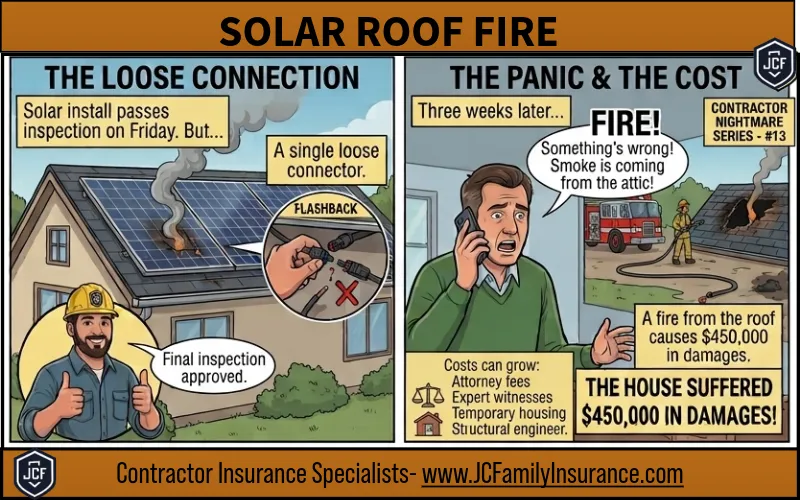
The Loose Connection
COMING SOON
COMING SOON
Could One Missing Coverage Shut Down Your Next Job?
Explore More Contractor Nightmares
Common questions answered
Answers to Frequently Asked Questions
What is considered hot work?
Hot work includes activities such as welding, cutting, brazing, soldering, grinding, torch work, and other operations that generate heat, sparks, or open flames.
Does General Liability cover fire damage caused by hot work?
Coverage depends on the facts of the loss, policy language, exclusions, endorsements, and contractual obligations. Each claim is evaluated individually.
What is a Hot Work Permit?
A Hot Work Permit is a documented authorization used to help control fire risks before, during, and after operations involving heat or sparks.
Which contractors need hot work insurance?
Many contractors perform hot work, including welders, plumbers, HVAC contractors, roofers, sprinkler installers, mechanical contractors, and steel fabricators.
What is Fire Watch?
A Fire Watch is a designated person who monitors the work area during and after hot work to identify and respond to signs of fire.
Does Umbrella Insurance help?
Commercial Umbrella Insurance may provide additional liability protection above the limits of underlying policies, subject to policy terms and conditions.
Why do commercial projects require Certificates of Insurance?
Property owners and general contractors often require proof of insurance before allowing hot work on a jobsite.
Can smoke damage create liability?
Yes. Smoke, soot, and fire suppression efforts can damage areas far beyond where the fire started, potentially resulting in significant property damage claims.
Is Inland Marine important for welding contractors?
Inland Marine Insurance may help protect tools, equipment, and mobile property used away from your primary business location.
Do you insure contractors performing hot work in Oregon, Washington, and Idaho?
Yes. JC Family Insurance specializes in helping contractors compare insurance options for welding, plumbing, HVAC, roofing, steel fabrication, and other commercial trades throughout Oregon, Washington, and Idaho.
Want to work with us?
Get contractor insurance, bonds, and certificates from a local team that understands how your business works.
CONTRACTOR INSURANCE
INSURANCE BY TRADE
CONTRACTOR RESOURCES
TOOLS & POLICY CENTER
ABOUT JCF
GET HELP
WA · OR · ID
CONTACT INFORMATION
(971) 412-4469
9020 SW Washington Sq Rd Portland, OR 97223
CONNECT WITH JCFAMILY INSURANCE
FOLLOW & REVIEW US ONLINE